Product description
About the species
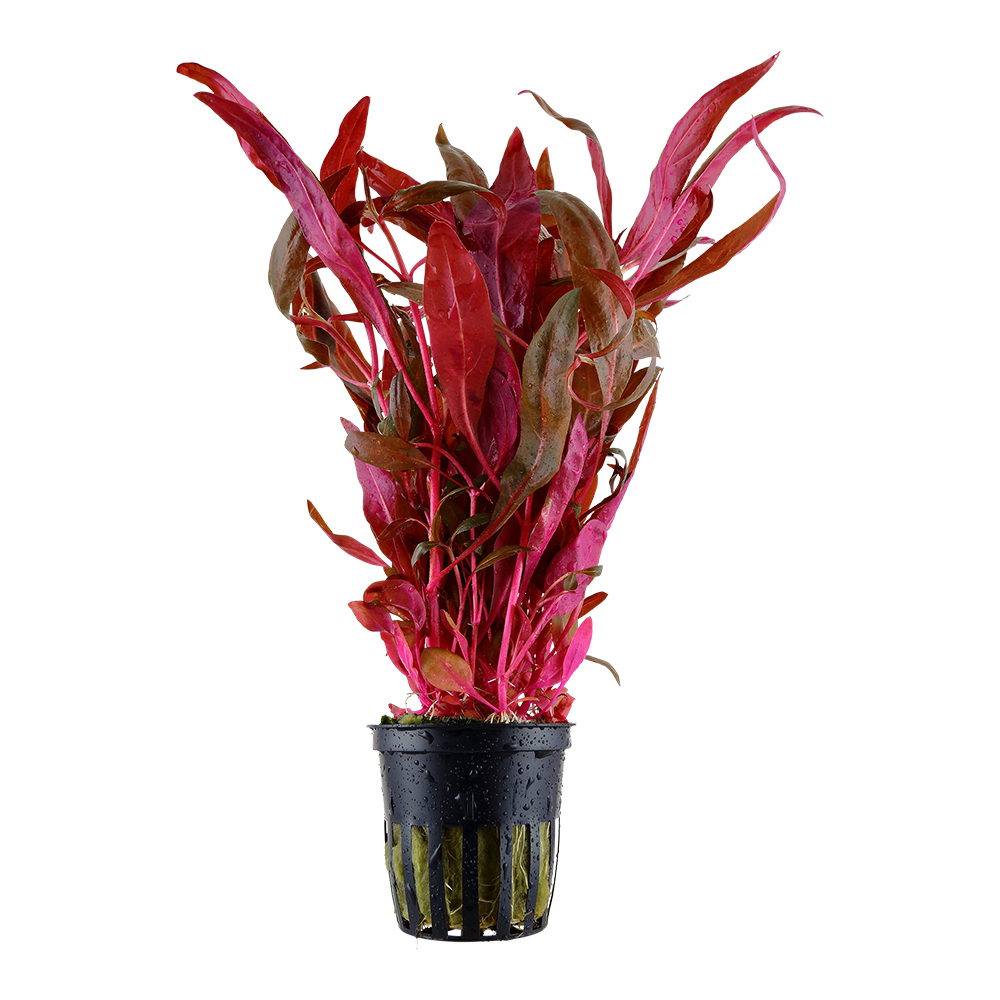
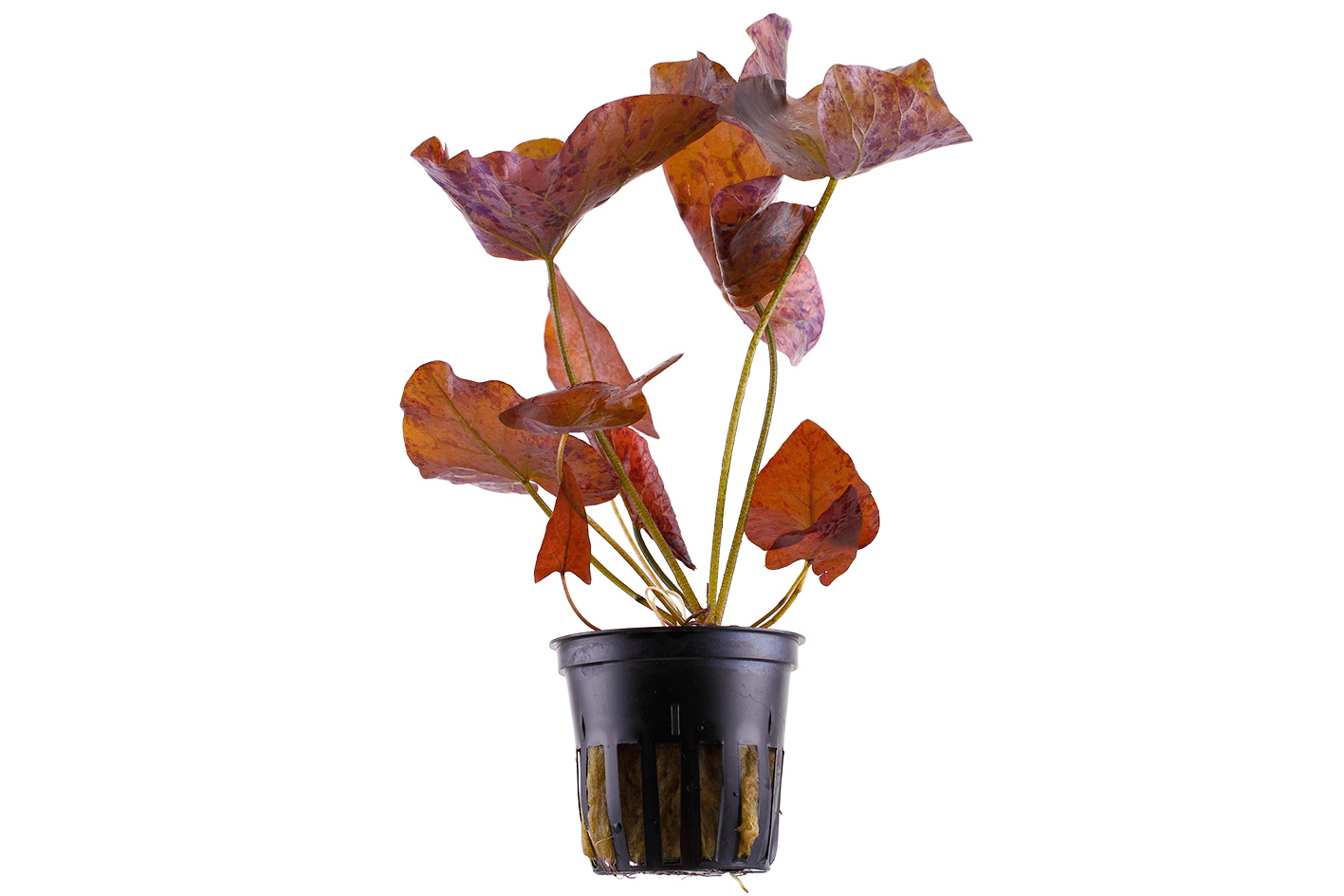
Nymphaea lotus is a West African bulb plant whose large leaves shift between green and red-brown with purple spots. The species varies a great deal, is often sold in a red and a green form and reaches anything from 20 to 80 centimetres tall. Before it starts sending up floating leaves it produces a mass of submerged ones, and in open aquariums it can flower fragrantly at the surface.
Facts
• Latin name: Nymphaea lotus
• Plant type: Bulb plant
• Origin: Africa
• Height: 20–30 cm
• Growth rate: Medium
• Position: Background
Light requirement
Medium light requirement. Reckon on around 0.5 W per litre or a modern mid-range LED unit. Too little light gives sparse, stretched shoots and pale leaves, while the right amount keeps the plant compact and richly coloured.
CO₂ & nutrition
Manages entirely without added CO₂, which makes it as suitable for a simple aquarium as for an aquascape. Liquid carbon or injected CO₂ speeds up growth but is never a requirement. Dose an all-round fertiliser with iron and micronutrients every week.
Planting
Set the bulb so its top third protrudes above the substrate — a fully buried bulb rots easily. The roots work their way down by themselves. Bulb plants are solitaires and look best with open space around them.
Carefully remove the pot and rinse the rock wool off the roots before planting — leftover rock wool can otherwise hinder rooting.
Care & propagation
Cut away leaves that start to deteriorate at the base. Many bulb plants take a natural rest period where they shed their leaves — leave the bulb in place, it pushes out new shoots after a few weeks. Root tabs in the substrate make a real difference.
Position in the aquarium
Given its mature height it belongs at the back or along the sides, where it forms a dense wall of greenery and hides equipment. In a smaller aquarium it can also be used as a solitaire in one corner.
Difficulty level
🟡 Moderate — wants stable lighting and regular fertilisation to look its best.
Delivery format
Delivered as a pot grown submerged, with the roots in rock wool. The pot holds several plants or stems that can be divided and planted separately.
Recommendation
A solitaire for larger aquariums, where a single specimen is enough as a focal point against a calm green backdrop. To keep the submerged leaves, cut the floating ones off as soon as they appear, and give the bulb a nutrient-rich substrate or a root tab.