Active soil or inert substrate
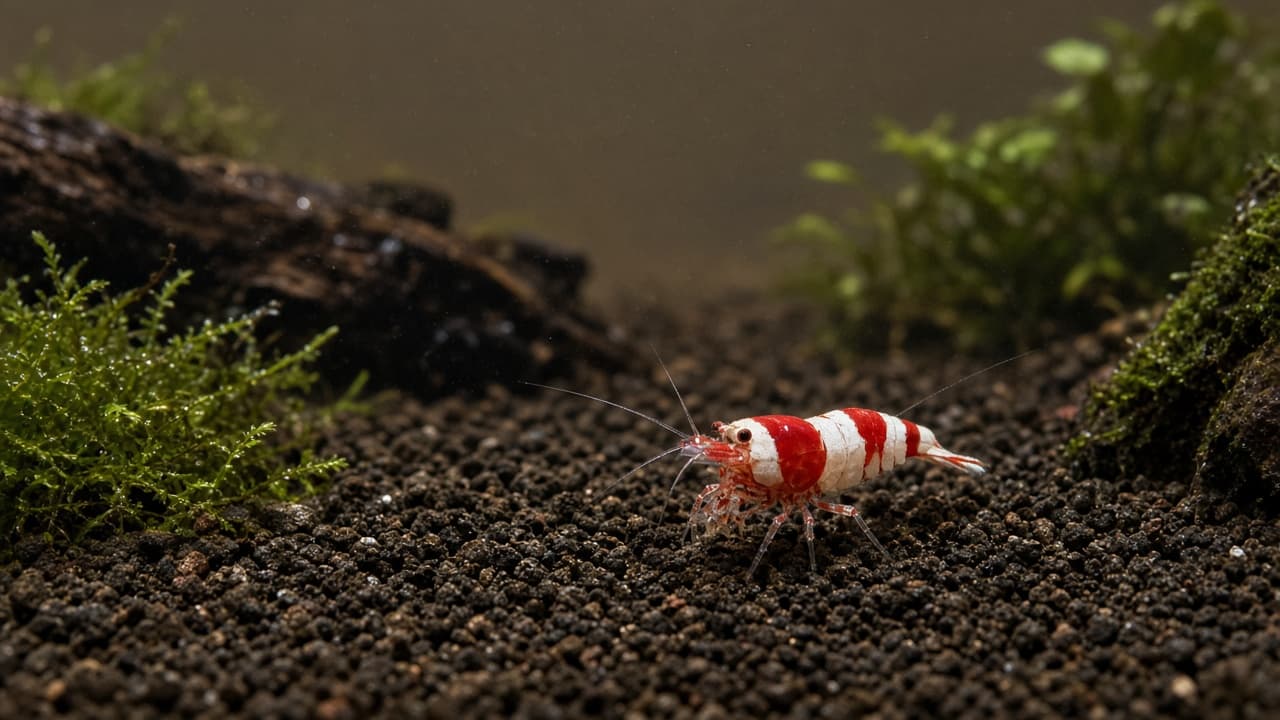
The substrate is not only decoration. It shapes pH, KH and how stable the tank stays over time.
Active soil and inert sand do two different jobs. Choose the wrong one for the species and you get either extra work or values the shrimp do not like.
Here we cover what the two types do, which shrimp belong where, and what happens when the soil stops buffering.
Two different philosophies
An inert substrate lets the water stay as you mix it. Active soil changes the water for you, especially at the start.
Neither is better on its own. They suit different goals.
What active soil does
Active soil lowers KH and often pulls pH down. It binds some nutrients and gives a dark, soft surface that Caridina like to graze.
In a new tank the soil can release ammonia. That is why it must be cycled. Crystal Red, Crystal Black and Blue Bolt do not go onto soil the same week the bag is opened.
What an inert substrate does
Sand, gravel and inert soil barely change the water. What you pour in is what the shrimp live in. It is easier to predict, but you get no help keeping soft, acidic water.
For Bloody Mary and Blue Diamond in tap water that is usually an advantage. You are not chasing a pH that the soil keeps trying to lower.
Neocaridina on sand
Neocaridina do well on dark sand or fine gravel. The colour shows clearly, plants can sit in root tabs or inert soil, and water changes behave predictably.
Active soil can be used for Neocaridina, but it is rarely necessary. Many colonies become easier to keep without it.
Caridina on soil
Most Crystal and Bolt lines are easiest to keep on active soil together with RO water and minerals. The soil helps keep KH near zero.
Without it you have to steer the values more actively. That works, but it is a different way of keeping them.
Keep in mind
• Let the soil mature before the shrimp move in
• Do small, regular water changes
• Do not stir the substrate without reason
• Measure pH and KH in the first months
When the soil is spent
After one to two years, sometimes longer, many soils stop buffering. KH and pH then start rising toward the water you add.
That is not a crash in itself. It is a sign that you either replace the soil, add new soil, or start controlling the water yourself.
Changing the substrate later
Replacing all the soil with shrimp still in the tank is stressful. Move the animals to a cycled tank, change the substrate, and cycle again.
Some people add a layer of new soil under or on top. It can work, but it stirs up a lot of mulm. Do it only if you know the filter and the shrimp can take it.
Plants and nutrients
Active soil gives plants a good start. Inert sand gives almost no nutrients. Then you need root tabs or a shrimp-safe liquid fertiliser.
Avoid fertiliser with copper. Mosses and Anubias often manage on what is already in the water.
Our advice
• Neocaridina: start with sand or an inert substrate
• Crystal Red, Crystal Black, Blue Bolt: active soil and RO
• Do not change philosophy in the middle of a working colony
• Measure, do not guess, when the soil gets old
Choose the substrate for the shrimp you will actually keep, not for the nicest bag in the shop.
Conclusion
Active soil is a tool for soft water. An inert substrate is a tool for predictability. Both can produce healthy colonies when they are used with the right species.
Once the substrate and water are right, it is easier to work with the young. Read on about how to raise shrimplet survival on purpose in a tank that already works.