Building a professional shrimp fish room
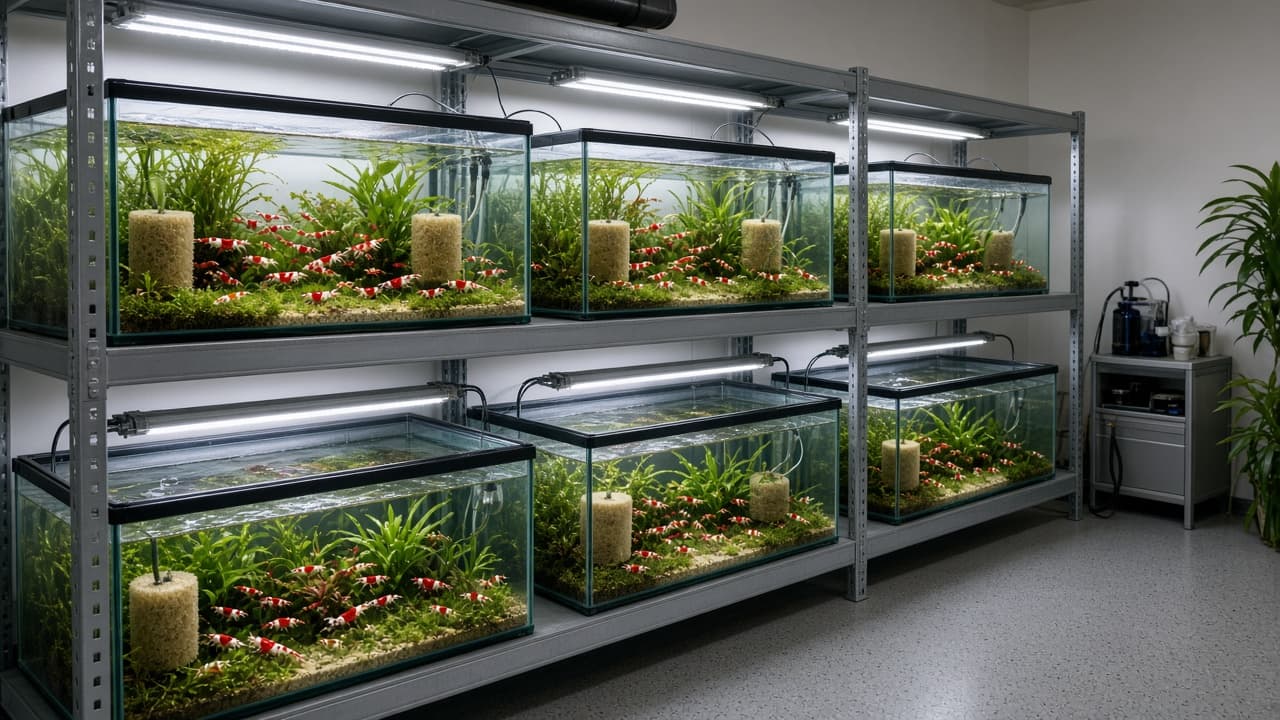
When the breeding operation grows, one aquarium in the living room is no longer enough. You need a room where water, power, racks and work surfaces are planned as a system.
A good fish room makes it easy to do the right thing every day. A poor room turns even simple water changes into a project.
Start with the flow, not the tank
Draw how you move through the room. Where does clean water come in? Where does old water go out? Where do you sort? Where do you pack?
If you have to carry buckets through the whole house every day, the room will not be used as planned.
The room
A basement, storage room or spare bedroom can work. It must handle humidity, have ventilation, and be dark enough that you can control lighting per shelf.
The floor must handle water. A floor drain is gold. If you have no drain, you at least need a clear station for emptying buckets.
Racks and weight
Water is heavy. A 40 litre tank with hardscape weighs more than most bookcases can take. Use steel racks, warehouse shelving or purpose-built aquarium stands.
Leave space between shelves to lift lids, service filters and see the shrimp from the side. Tight shelves look efficient in photos. They are tiring to live with.
The water station
This is the heart of the room. This is where you mix RO, minerals and temperature. This is where you measure TDS. This is where you fill a jug or a hose.
• RO filter or mixing barrel
• Container for remineralised water
• Thermometer and TDS meter
• Hoses with shut-off valves
• A clear drain or bucket station
Label the containers. Mixed Caridina water and Neocaridina water must not be interchangeable by mistake.
Power and safety
All electrics must handle moisture. Use grounded outlets, drip loops on cords, and never put power strips on the floor.
Split the circuits. Lighting, heat and air pumps should not sit so that one fault shuts down the whole room.
Have a plan for power cuts. Air stones and battery air can save a tightly packed rack.
Air and temperature
Many tanks in the same room raise both heat and humidity. Ventilation is needed. An even room temperature is often better than a heater in every small tank.
Caridina and Neocaridina may need different zones. It is easier to control the room air than to chase different temperatures in twenty buckets.
Workspace
You need a dry bench. That is where you sort. That is where you take photos. That is where you pack bags. That is where you write the log.
Without a workspace, things end up on the lids. Then both husbandry and breeding get sloppy.
Quarantine and sick bay
New animals should not go straight into the breeding rack. Keep at least one quarantine tank, ideally with its own net, hose and bucket.
Disease spreads easily through splash and shared tools. A professional room takes that seriously from the start.
How many tanks should you start with?
Build for more than you have today, but do not fill every slot in the first week. A common first step is 4–8 tanks. Then 12–20 once the routines are in place.
A room with thirty tanks and no routine is not professional. It is only large.
Daily routine
The room should make the daily round short. Look, feed, check temperature, write it down. Water changes should be possible shelf by shelf without rearranging the room.
If a round takes more than an hour for a small rack, the layout is wrong. Move the water station closer to the tanks, not the other way around.
Common mistakes
• Racks that are too weak
• No drain
• Power on the floor
• The same hose in every tank
• No quarantine
• Too many tanks before the routines exist
Conclusion
A professional shrimp fish room is not more lights. It is a room where water, power, hygiene and workflow are planned so you can do the same things correctly, week after week.
When the room works, breeding, quarantine and selling all become easier. Then you can spend the time on the shrimp, not on carrying buckets.