Advanced TDS Control
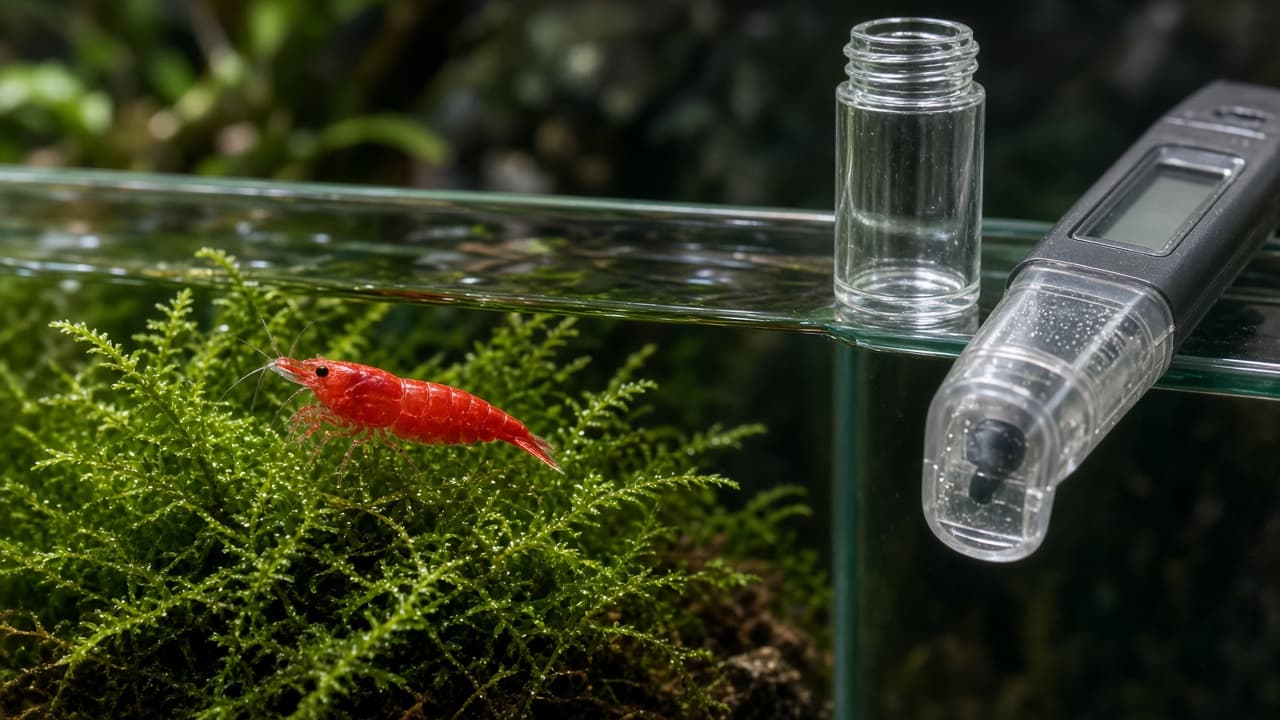
TDS is the fastest way to see whether the water in a shrimp tank is moving in the right direction.
The number is not the whole truth. It shows how much dissolved material is present, not which salts they are. For Crystal Red, Blue Bolt and Red Sakura, TDS is still the daily compass.
What TDS actually measures
TDS means total dissolved solids. The meter converts conductivity into an estimated level in ppm or µS.
Two tanks can show the same TDS and still be different. One is remineralised RO water. The other is old tap water with organic waste. The shrimp notice the difference.
Target ranges that work in practice
Keep a narrow window and stay there. Shrimp handle a stable number better than a "perfect" number that jumps.
• Crystal Red and Crystal Black: often 90–140 ppm
• Blue Bolt: often 80–130 ppm
• Neocaridina such as Bloody Mary and Red Sakura: often 150–250 ppm
These are working ranges, not laws. Follow the line you keep and the water the shrimp already tolerate.
TDS, GH and KH belong together
TDS without GH is only a number. GH shows calcium and magnesium. KH shows buffering. Caridina in soil want low KH. Neocaridina often do better with a little more buffer.
When you raise GH with shrimp mineral, TDS rises. When soil or botanicals release organic acids, TDS can move even if GH stays still.
A simple check order
• Measure TDS at every water change
• Measure GH and KH every week or two
• Change only one thing at a time
Measurement you can trust
Calibrate the conductivity meter. Rinse the probe in RO water. Read at the same water temperature each time.
Write down both ppm and temperature. A cold reading looks lower. A warm one looks higher. Do not compare sloppy numbers over time.
Daily operation and water changes
Mix new water to the same TDS as the tank, not to a dream value. Then change 10–20 percent at a time.
In a Caridina tank with Crystal Red, small and frequent changes beat large and rare ones. Shrimplets notice first.
When TDS rises without added salt
Evaporation concentrates everything already in the tank. Top up with plain RO water, not remineralised water.
Overfeeding, snails and old mulm also raise TDS. More salt will not help then. You need cleaning and a calm water change.
When TDS falls
A drop after a change usually means the refill was too soft. Correct the next mix, not the whole tank at once.
Plants and biofilm take up some nutrients, but they rarely explain a big drop. Look at how you mix first.
Adjust without shocking the colony
Aim for at most 10–15 ppm per day in a sensitive tank. Blue Bolt and berried Crystal Red females are especially sensitive.
If you raise with salt, dissolve it in a jug first. Never pour dry mineral powder into the tank.
Common TDS-control mistakes
• Chasing an exact number every day
• Mixing tap and RO without measuring
• Changing filter media and water on the same day
• Trusting an uncalibrated pen
Build a routine that lasts
A schedule beats talent. Measure, mix, change, log. When the curve is flat, you can talk about breeding in earnest.
Once the TDS routine is in place, the next step is RO water and remineralisation. Keep reading the AquaShrimp guides and build further at your own pace.