Bacterial blooms and crashes in shrimp tanks
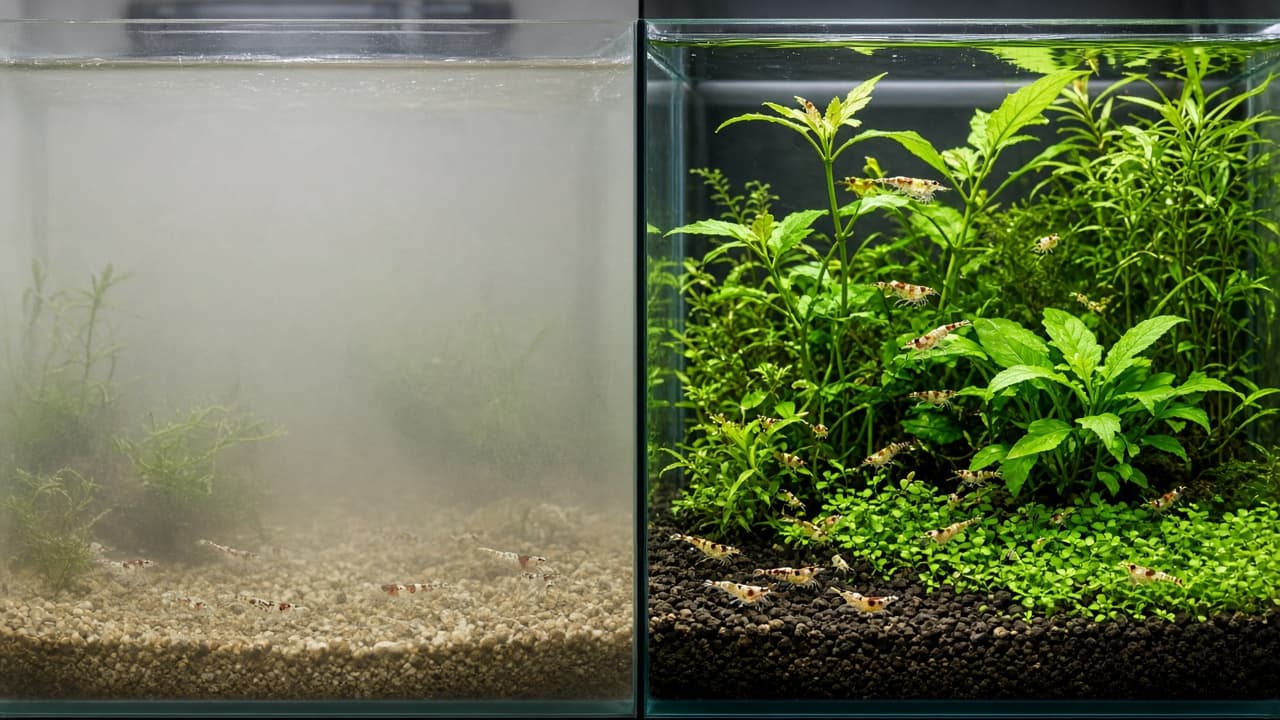
Milky water and a silent colony overnight are two of the most frightening things in the hobby. They often travel together, but they are not the same thing.
A bacterial bloom is usually visible cloudy water. A crash is when the tank's balance falls and the shrimp die or stop functioning. Sometimes they arrive together. Sometimes they do not.
The aim here is that you can recognise what you are seeing, avoid the usual panic moves, and know how to lower the risk next time.
What a bacterial bloom is
The water turns milky or smoky when free bacteria grow quickly in the water column. It often happens in new tanks, after a big clean, or when a lot of food or a dead shrimp suddenly adds extra nutrients.
The cloud itself does not always kill. What kills is the ammonia, nitrite and low oxygen that can come with it.
What a crash is
A crash is when the biological filtration cannot keep up. Ammonia or nitrite rises, pH may swing, and the shrimp run out of oxygen or are harmed by nitrogen.
Crystal Black and Blue Bolt cope worse than a hardy Blue Diamond group. An Amano may still look lively, which can trick you into thinking the tank is fine.
Common triggers
• Overfeeding for several days in a row
• A dead fish or shrimp that was not removed
• A filter that was switched off or rinsed in tap water
• Water changes that are too large in a young tank
• New soil releasing ammonia
• Algae treatment or other chemicals
Write down what happened in the last three days. The cause is usually there.
Milky water
If the shrimp are still eating and moving, measure the values and wait. Many blooms clear in a few days once the filter catches up.
Do not replace almost all the water. You then remove both bacteria and the little stability that is left.
Do this
• Measure ammonia and nitrite
• Stop feeding until the water clears
• Make sure the surface is moving and the filter is running
• Do only a small change if the values are dangerous
Ammonia and nitrite
Anything above zero is a warning in a shrimp tank. Then it is no longer just cosmetic cloudiness.
A small, well-matched water change and extra air or filter flow are safer than pouring in bottled bacteria and hoping. Added bacteria can help, but they do not replace a living filter.
What you should not do
• Change 70–80 percent of the water in a panic
• Wash the filter clean at the same time
• Add medication "just in case"
• Move the whole colony into an uncycled tank
• Feed extra to cheer the shrimp up
Those moves turn a bloom into a crash more often than they save it.
What you can do
Remove anything visibly dead. Dim the lights if algae or plants have just died off. Keep the temperature stable. If you have a spare, healthy, cycled tank, the most sensitive animals can move there – after acclimation.
Otherwise they stay where they are, in the filter that already knows the water.
Afterwards
When the water is clear and the values are zero again, feed very little for a week. Watch for moults. Some shrimp die later from stress, even when the tank looks fine.
Do not change soil, hardscape and filter in the same week the tank has just recovered.
How you lower the risk
Cycle new tanks. Feed less than you think. Keep a spare sponge in a healthy filter. Avoid cleaning everything on the same day.
An older, slightly "dirty" shrimp tank with moss and leaves crashes less often than a freshly polished one.
Conclusion
Milky water is a signal to measure and stop feeding. A crash is when nitrogen and oxygen have stopped working. In both cases, the person who does a little, correctly, and waits is the one who wins.
When you can read the shrimp, the young and the water, you are ready for the next level. Keep learning – intermediate level only ends when the colonies cope even in the week something goes wrong.