Commercial Breeding and Systems
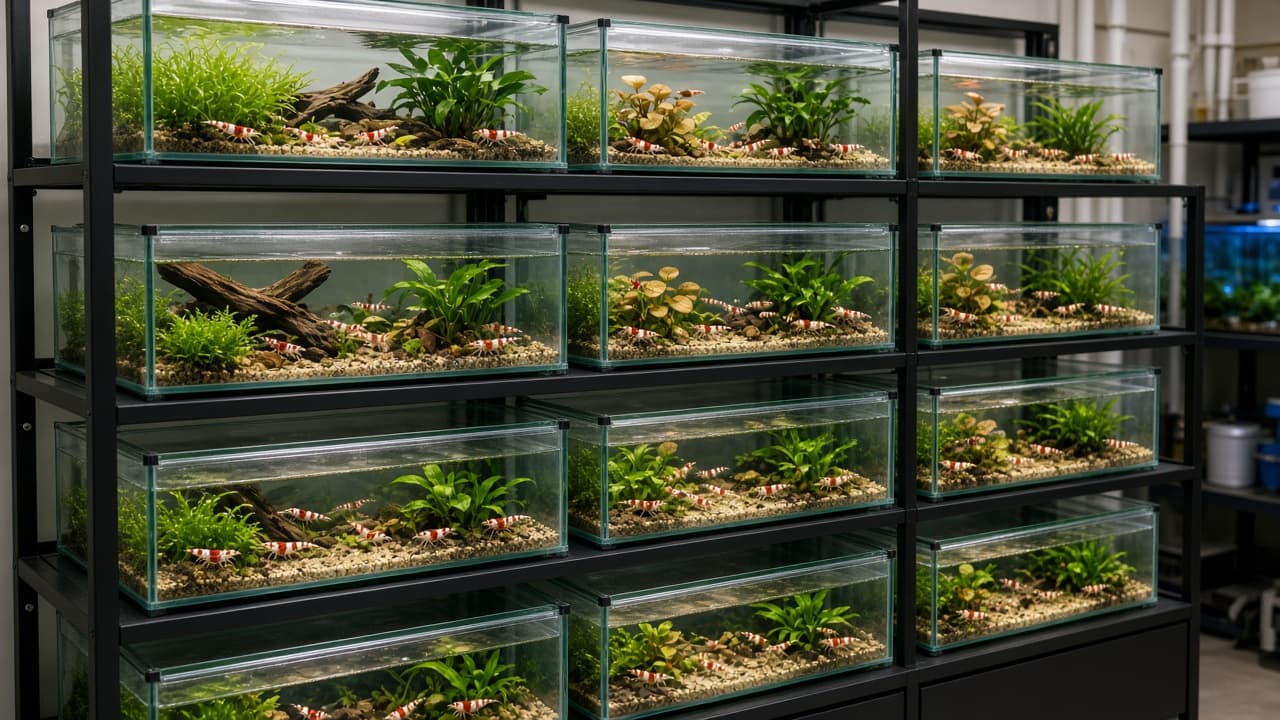
Commercial shrimp breeding is the same husbandry as at home, only with more tanks and less room for sloppiness.
A rack of Red Sakura and Crystal Red does not break because of volume. It breaks when water, feeding or sorting fall behind.
When a hobby becomes production
The line is crossed when you can no longer check every tank by feel. Then you need a schedule, labels and the same recipe everywhere.
If you are still guessing TDS in the jug, you are not ready for more shelves.
Racks, tank size and flow
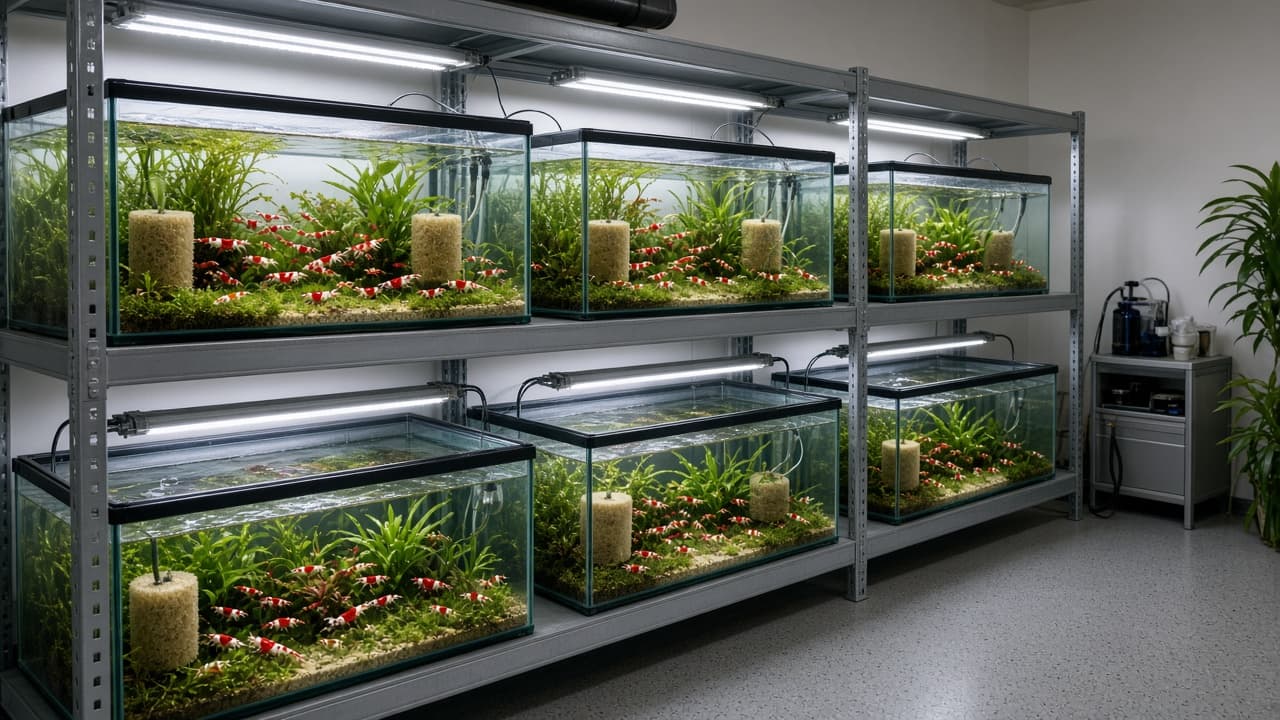
Many breeders run 20–45 litres per tank. That is enough for a line and small enough to empty if something goes wrong.
Gentle circulation, sponge filters and a covered lid beat strong pumps. The shrimp should graze, not fight the current.
Water preparation at scale
A central RO unit, a mixing barrel and a calibrated meter save hours. Mix one recipe per species group.
Caridina and Neocaridina should not share the same jug. Blue Bolt and Bloody Mary have different targets.
A daily water routine
• Produce RO ahead of time
• Remineralise for today's changes
• Spot-check one tank per shelf
Feeding and work rhythm
Same time, same amount, same staples. Overfeeding thirty tanks is a silent TDS problem.
Let biofilm and leaves do the heavy work. Bought food is a supplement.
Biosecurity in the room
Dedicated nets per row. Hands and hoses between sick and healthy tanks are the most common infection route.
New animals stay in quarantine even when you trust the seller. Production cannot absorb one bad delivery.
Sorting, packing and dispatch
Sort in cool, oxygen-rich water and keep the time short. An SSS Crystal Red stressed in a bowl becomes a complaint.
Pack by variety. Do not mix Red Sakura with Crystal Black in the same bag just because they go to the same customer.
Economics and bottlenecks
Count hours, power, salt, food and losses. A beautiful line that takes three extra hours a week can be a worse business than an even working group.
The usual bottleneck is not breeding. It is water and sorting.
Checklists beat heroics
Write what happens on Monday, Wednesday and Friday. Do not let the system depend on you remembering.
When someone else can water your tanks for a week, you know the system is grown-up.
Grow more slowly than you want
Add a shelf when the last one is boringly stable. Not when you have a good month in the shop.
When the system carries itself, read on about import, quarantine and legal sales. The AquaShrimp guides stay with you as the volume grows.