Common mistakes that kill shrimp
Most shrimp do not die by chance. They die from a few recurring mistakes that are easy to make when you are new, and just as easy to avoid once you recognise them.
The list is not there to scare you. It is there so you can look at the aquarium and know what is actually dangerous.
Adding shrimp too soon
A new aquarium can look clear after a few days. The bacteria that handle waste are still not ready. Ammonia and nitrite can then rise just as the shrimp move in.
Wait until the tank has cycled. Bloody Mary and Red Sakura are hardy, but they are not immune to an immature filter.
Water changes that are too large or too cold
Changing half the water with freshly drawn tap water is a classic way to lose a colony. Temperature, GH and KH can then jump at the same time.
Change 10–20 percent instead, with water that matches the temperature and has been dechlorinated. It is less dramatic, and much safer.
Overfeeding
Food that sits becomes waste. Waste becomes poor water chemistry. Poor water chemistry kills shrimp, especially shrimplets of Yellow or Blue Diamond.
If you are unsure, feed less. A mature tank with moss feeds the shrimp even between meals.
Copper and unsuitable treatments
Copper is found in some fish medications, algaecides, snail killers and sometimes in old tap water from copper pipes. For shrimp, even small amounts can be lethal.
Read the contents before you add anything. If a product is made to kill invertebrates, it should not go near Crystal Red, Amano or any other shrimp.
Sudden temperature swings
A window in summer sun or a cold night beside an open window can be enough. Shrimp tolerate a range, but not water that moves several degrees in a few hours.
Place the tank somewhere with even room temperature. Avoid radiators, draughts and direct sunlight.
Chasing perfect values every day
Pouring in pH adjusters, minerals and additives every time a number is off creates more swing than it solves. The shrimp never get time to settle.
Measure, understand and change slowly. An Orange Sakura that has lived a long time at pH 7.6 does not need to be moved to 7.0 just because a chart says so.
Too little cover during moulting
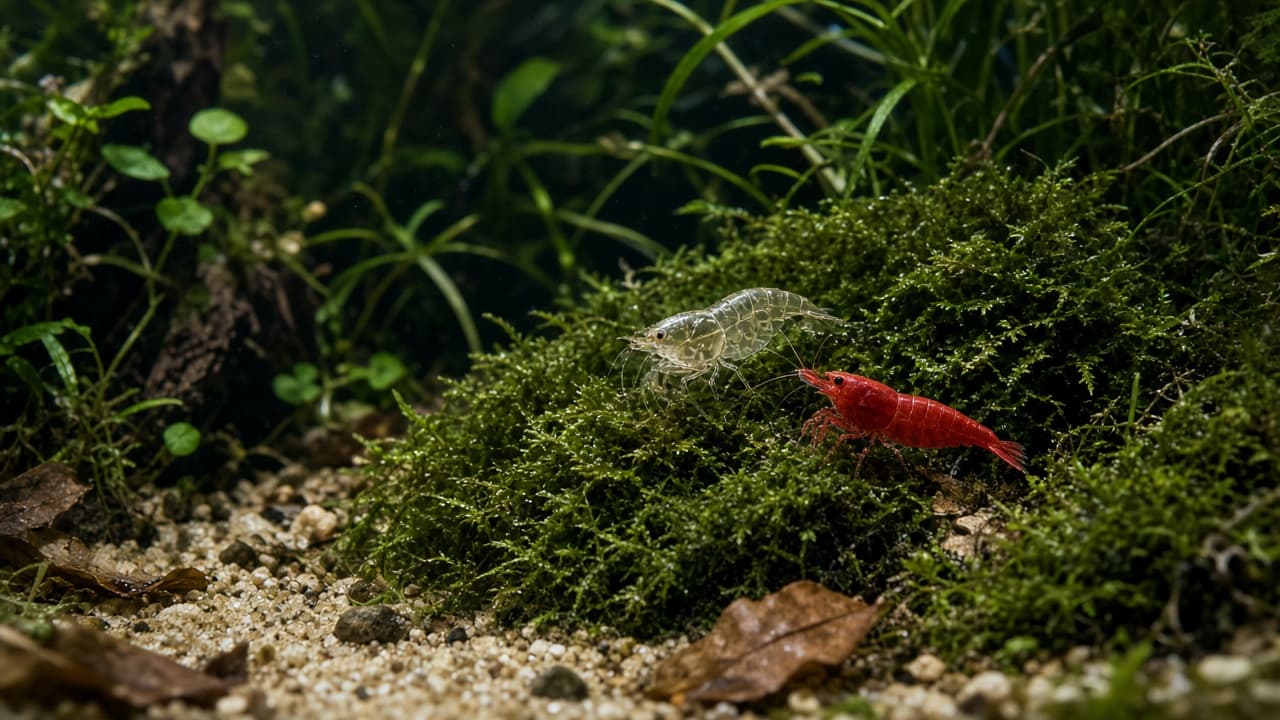
When shrimp moult they are soft and exposed. In a bare tank they can be stressed even without fish. Moss, roots and leaves give protection.
An empty shell on the substrate is normal. It is not a dead shrimp. Leave it; other shrimp often feed on it.
Mistaking a shell for a dead shrimp
Look for eyes and a body. A shell is translucent and hollow. A dead shrimp has a body and quickly turns pale or orange-red in a different way.
Mixing without thinking about the water
Putting Crystal Black or Blue Bolt into the same tap-water tank as Blue Navy often ends badly for the Caridina. They do not tolerate the same water, even if they seem fine on the first day.
Keep the more sensitive group in its own, prepared aquarium. That is not being mean. It is husbandry.
A checklist to avoid
• Moving shrimp into an uncycled aquarium
• Large, cold or chlorinated water changes
• Copper, algaecide and snail poison
• Daily overfeeding
• Direct sun and large temperature swings
• Constant chemical adjustments
It is possible to get this right
Most colonies that fail do so in the first weeks, when several of these mistakes happen at once. A mature tank, light feeding and calm water changes remove the greatest risk.
Once you recognise these traps, it becomes easier to read on about temperature, how many shrimp to keep, and how to add new animals to a colony that already works.