Filters for shrimp - what works best?
When starting a shrimp aquarium, the filter is often the most important piece of equipment you choose.
Many beginners focus on lighting, plants and shrimp, but the truth is that a good filter is often more important to success than any other technical equipment.
A filter is not primarily about making the water look clean.
Its most important task is to create a biologically stable aquarium where the shrimp can live, grow and reproduce.
In this article, we'll go over how filters work, which types are best for shrimp, and what mistakes you should avoid.
What does a filter actually do?
Many people think that the filter works like a vacuum cleaner that collects dirt.
That is only partly true.
The most important function is biological filtration.
When shrimp eat and produce waste, ammonium is formed. In a stable aquarium, beneficial bacteria first convert this to nitrite and then to nitrate.
These bacteria need large surfaces to grow on.
This is where the filter comes in.
The more biological filter surface you have, the more stable the aquarium will be.
Mechanical and biological filtration
A filter usually works in two ways.
Mechanical filtration
Captures:
• Leftover food
• Plant parts
• Particles in the water
It makes the water clearer.
Biological filtration
Makes room for beneficial bacteria.
It is the biological filtration that keeps the shrimp healthy in the long run.
For shrimp aquariums, biological filtration is almost always more important than strong mechanical filtration.
What do shrimp want?
In nature, many shrimp live in relatively calm water environments.
They therefore appreciate:
• Soft water flow
• High oxygen content
• Stable biological balance
• Lots of cinema
A filter that creates strong currents is rarely optimal.
The goal is instead a calm and stable flow where the entire aquarium gets circulation without the shrimp having to fight against the current.
Why are shrimp-proof filters important?
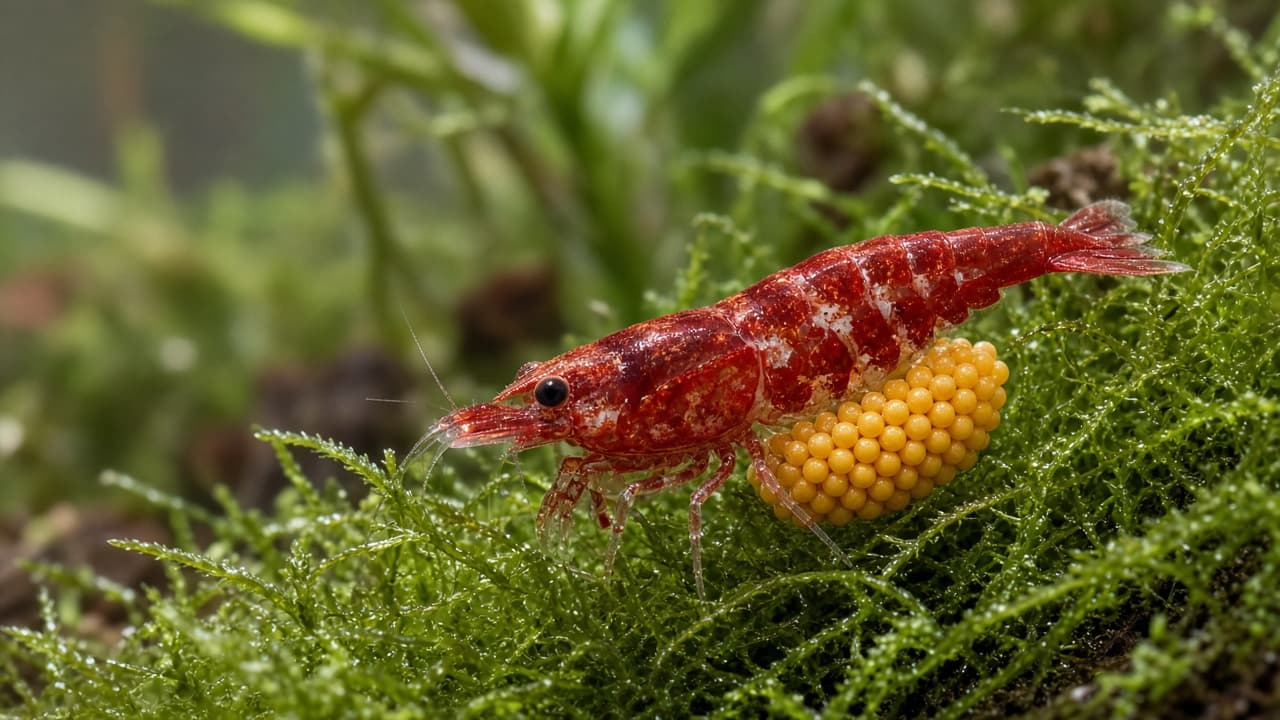
Newly hatched shrimp fry are extremely small.
They are often only a few millimeters long and can easily be sucked into standard filter intakes.
This is one of the most common reasons why beginners lose fry without understanding why.
A shrimp-proof filter has:
• Fine pore structure
• Protected intake
• Low risk of fry getting stuck
This means that both adult shrimp and fry can move safely throughout the aquarium.
Sponge filter - the shrimp farmer's favorite
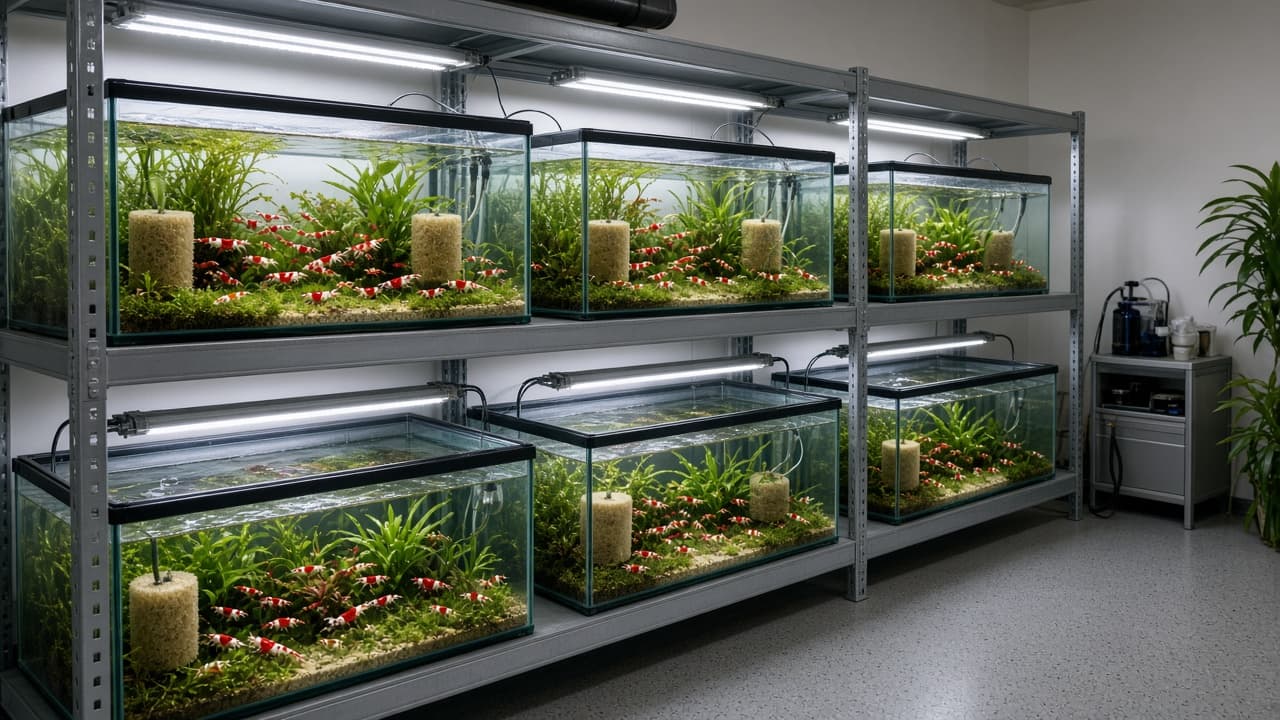
If you visit professional shrimp farmers around the world, you often see the same thing.
Sponge filter.
There are several reasons for this.
Benefits
• Very biological filter surface
• Shrimp safe
• High oxygenation
• Easy to clean
• Cheap to operate
• Perfect for fry
In addition, large amounts of biofilm often develop on the fungus.
For shrimp, the filter therefore becomes not only a purification device but also a feeding place.
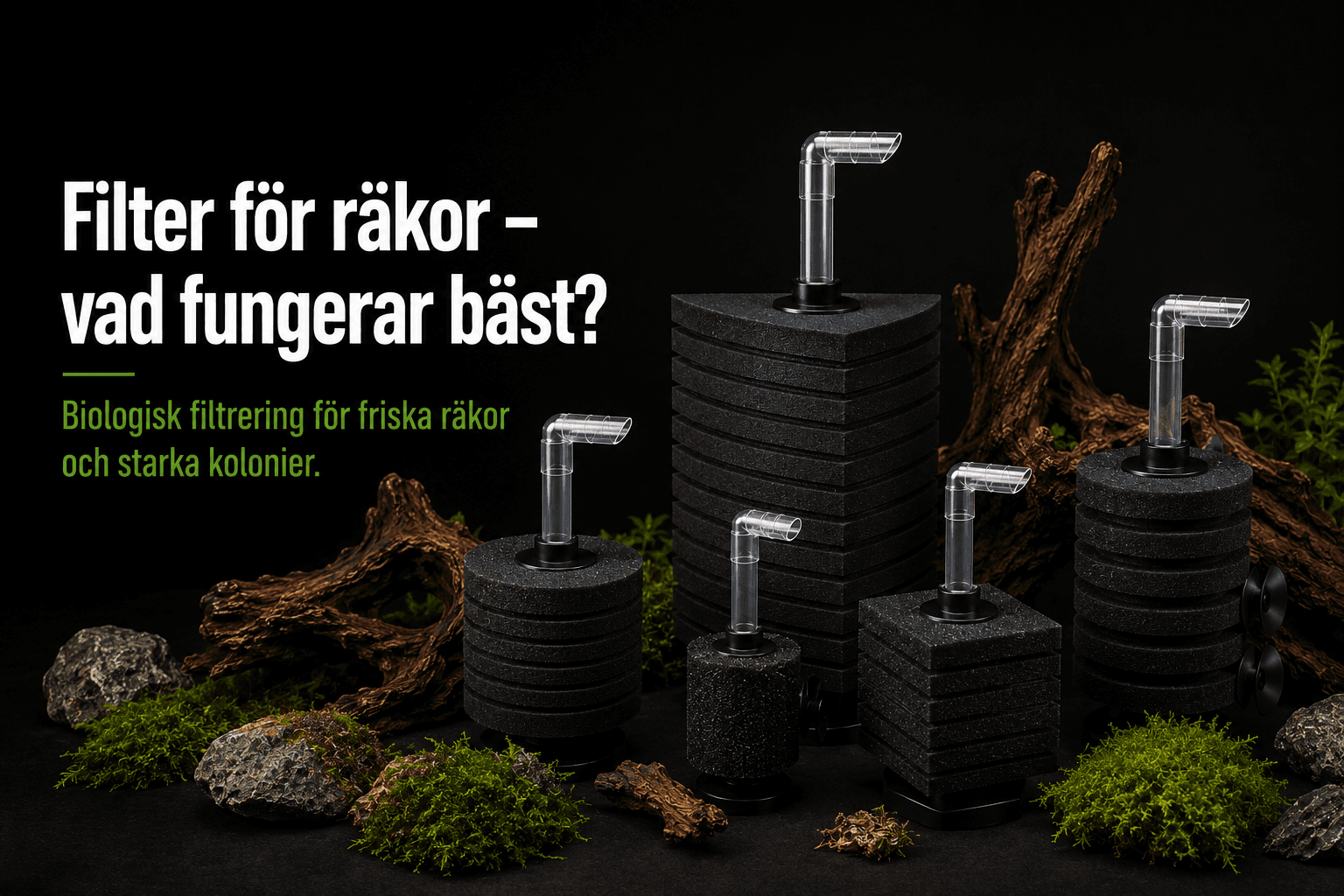
Corner filters and internal filters
Many modern shrimp aquariums use compact internal filters.
Examples that work very well are:
• NSF-C200L
• MAXBIO-200L
These are popular because they:
• Takes up little space
• Are easy to install
• Provides good biological filtration
• Suitable for smaller shrimp aquariums
For many beginners, this is a very good solution.
Hanging filter - does it work?
Yes.
Hanging filters can work great for shrimp.
But there is one important thing to keep in mind.
The intake must be protected.
Many therefore use a filter sponge over the suction tube to prevent fry from being sucked in.
When this is resolved, hanging filters can provide:
• Large filter volume
• Good oxygenation
• Easy service
Do you need strong circulation?
No.
It is a common misunderstanding.
Shrimp do not need a strong current.
Too strong circulation, on the contrary, can:
• Stress the prawns
• Make it difficult for fry
• Reduce their natural behavior
The important thing is that the water moves throughout the aquarium and that the oxygen level is kept good.
How often should the filter be cleaned?
Not as often as many people think.
The beneficial bacteria live in the filter.
If you clean too hard, you risk destroying large parts of the bacterial culture.
When the filter starts to lose flow, it is usually enough to:
• Take out the filter material
• Rinse it gently in aquarium water
Do not use hot water or detergents.
The goal is to preserve the bacteria while removing excess dirt.
Common mistakes
Filter too small
Many people buy the smallest possible filter.
A little extra filter capacity often gives a more stable aquarium.
Too strong filter
High power does not mean better results.
Shrimp appreciate quiet environments.
Unprotected intake
A common problem that leads to lost fry.
For thorough cleaning
A sterile filter is not a good filter.
The beneficial bacteria must be allowed to survive.
Which filter do we recommend?
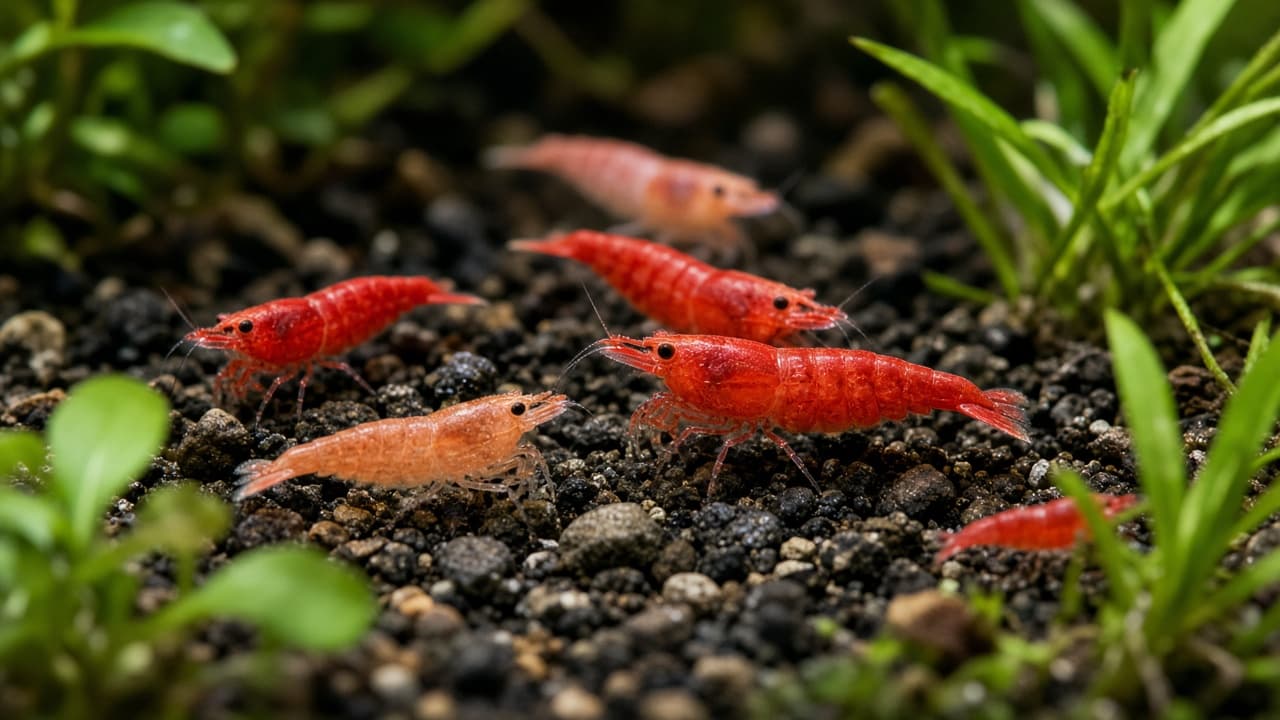
For most beginners who hold:
• Bloody Mary
• Ride Sakura
• Blue Dream
• Blue Velvet
• Yellow
is a shrimp-proof mushroom filter or a smaller internal filter is often the best solution.
Products such as NSF-C200L and MAXBIO-200L work very well in small and medium-sized shrimp aquariums.
They offer a good balance between biological filtration, safety for fry and ease of care.
Conclusion
The best filter for shrimp is rarely the most expensive or powerful.
The best filter is the one that creates a stable biological environment over a long period of time.
If you choose a shrimp-proof filter with a good biological filter surface, quiet circulation and easy maintenance, you have already come a long way.
For shrimp, stability is more important than technology.
A well-functioning filter not only provides clearer water - it creates the basis for a healthy aquarium where both adult shrimp and fry can thrive for many years.