Genetics and colour breeding basics
Shrimp colour is not chance. It follows inheritance, and it can strengthen or fade depending on which animals you let breed.
You do not need to know chromosomes to breed better-looking shrimp. You need a few rules: one line per tank, selection over time, and the knowledge that wild type always remains in the background.
This guide stays with what is enough at intermediate level. The more advanced breeding work comes later.
Why colours fade
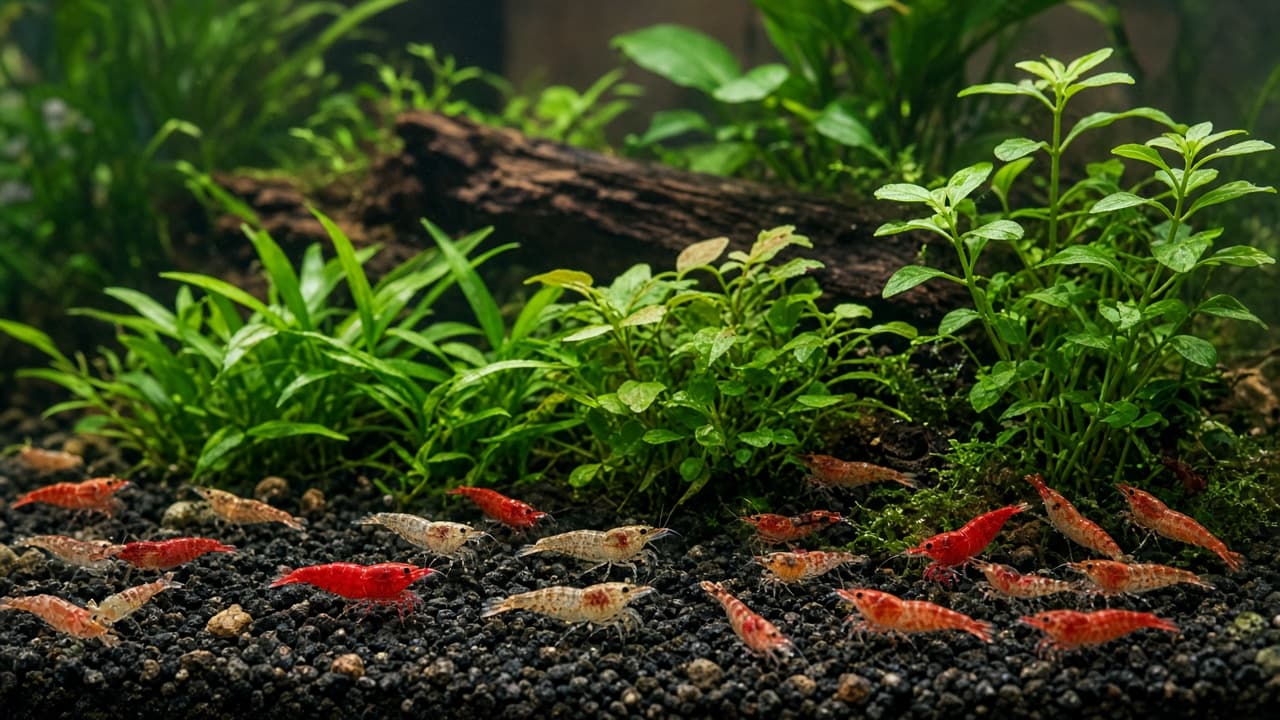
A strong Bloody Mary paired with a paler red shrimp produces young in between. If the paler young then breed freely, the average quality of the colony drops.
It also happens without mixing varieties. Every clutch has variation. Without sorting, the ordinary, slightly weaker animals take more space over time.
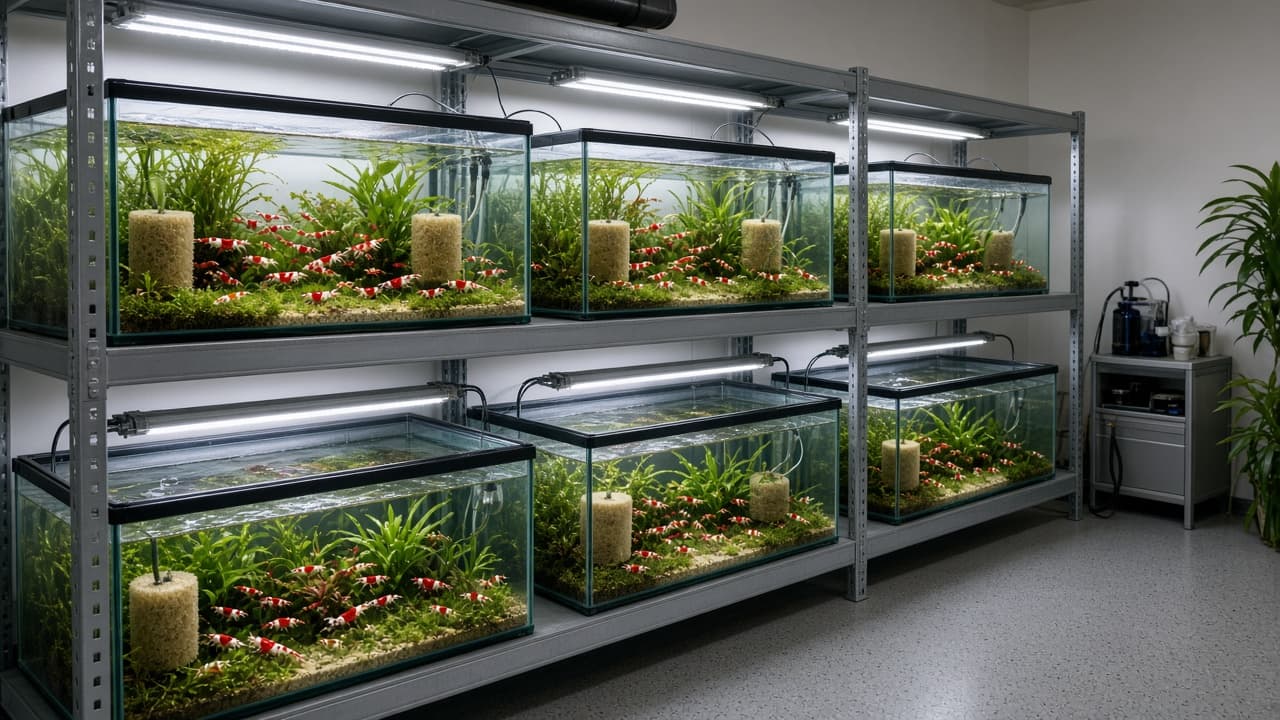
One colour per tank
Neocaridina davidi is the same species whether it is called Red Sakura, Blue Diamond or Bloody Mary. They can breed with each other. The young often become brown, grey or unevenly coloured.
If you want to keep a clear colour, each variety needs its own tank. That is the most important genetic rule in the hobby.
How colour is inherited
Colour sits in several genes that work together. That is why you rarely get a simple either-or. You get a scale: weak, medium, strong.
That is why two strongly red parents can produce both deep-red and more translucent young. You choose which ones stay and breed on.
What you can control
• Which adults stay in the breeding tank
• Which young are moved out
• That the line is not mixed with another colour
• That you do not top up with random shrimp
Recessive and dominant colours
Some colours only show when the shrimp carries the trait from both parents. Others show when the trait comes from one side. In practice you notice this as a colour "disappearing" in a mix, or returning a few generations later.
At this level it is enough to know that hidden traits exist. Do not mix lines hoping for something new unless you are ready to sort hard for several years.
Wild type appears
The original Neocaridina is translucent brown. It is often called wild type. The trait remains even in a red or blue line.
When a clearly brown shrimp appears in a Bloody Mary colony, it should not stay in the breeding tank. It can otherwise spread more wild colour into the next clutches.
Bloody Mary, Red Sakura and mixes
Red Sakura has a lot of colour in the shell. Bloody Mary has colour in the tissue as well, which gives a deeper, more glowing red. Mix them and you quickly lose what makes Bloody Mary distinct.
Blue Diamond works the same way against other blue and red Neocaridina. A clean blue line stays clean, or the result quickly turns grey.
Crystal Red, Crystal Black and Blue Bolt
In Caridina, genetics is more about pattern than a single body colour. Crystal Red and Crystal Black share an origin. Blue Bolt sits closer to Taiwan Bee lines and is more sensitive.
Mixing Crystal Red with Blue Bolt rarely gives better shrimp. You mostly get unpredictable patterns and a line that is hard to steer. Keep them apart until you deliberately want to work with hybrid breeding.
What you can influence already
• Buy an even starter group, not mixed leftovers
• Keep one variety per tank
• Remove clearly weak animals and wild type
• Top up from the same line if you need more
That is enough for a colony to look better over a year. You do not need protocols and spreadsheets yet.
What belongs to advanced breeding
Chasing the highest Crystal grade, planning a backcross or building a new colour does not belong here. It needs more tanks, more notes and water you can already keep still.
Learn to keep one line clean first. That is the foundation all later breeding rests on.
Conclusion
Genetics in the shrimp tank is mostly discipline. One colour, one tank, and a calm eye for which animals should carry the line forward.
Once that is clear, the next step is practical: actually sorting shrimp by quality, without emptying the colony of life.