How to increase shrimplet survival
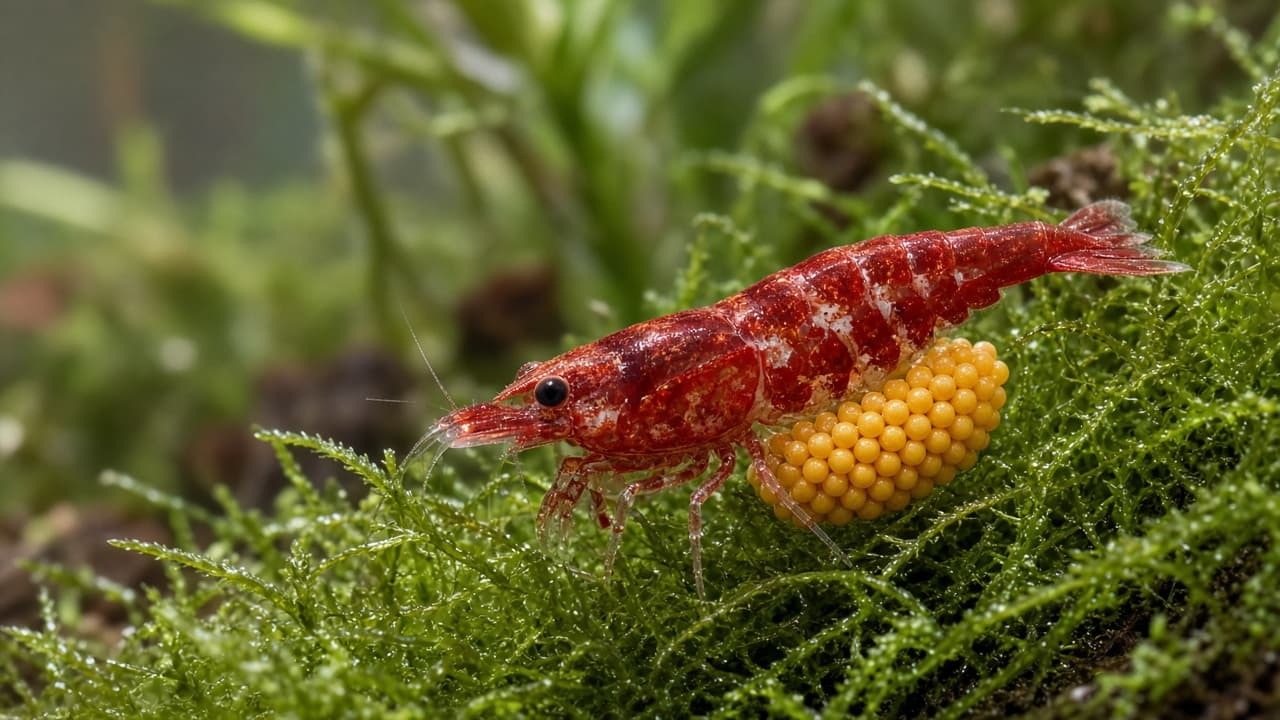
When females carry eggs but the colony does not grow, you do not need more luck. You need a nursery the young can actually live in.
This is the practical follow-up to the article on why shrimplets disappear. These are the steps that actually raise the number of young you see after a month.
None of it needs extra gear. It needs you to stop cleaning away what the young live on.
The difference from only hoping
Hoping is checking the moss once a week. Working on survival is building the tank so the young find food and do not go into the filter.
Change one or two things at a time. Then you can see what helped.
A shrimp-safe filter
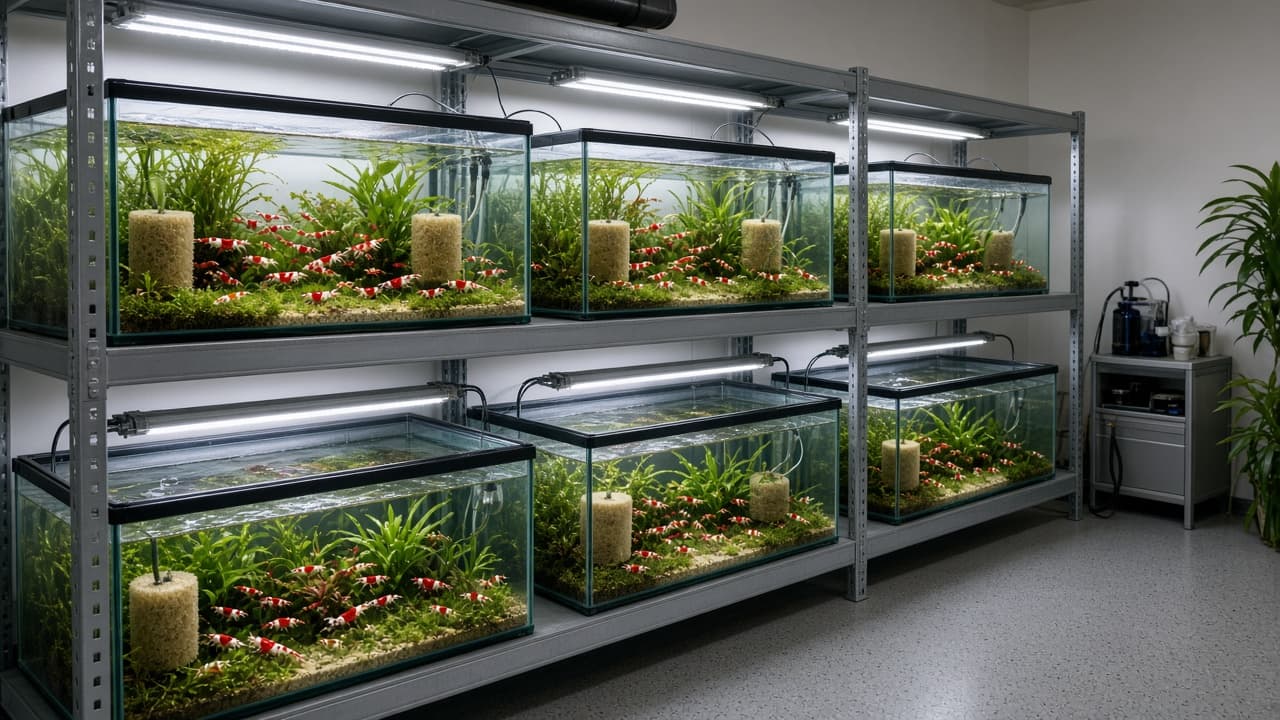
Put sponge over every intake, or use a sponge filter. It is the single most effective step in most tanks.
Also lower the flow if the young are blown around in open water. Crystal Red and Blue Bolt lose more shrimplets in strong current than a hardy Bloody Mary group.
Moss walls and hiding places
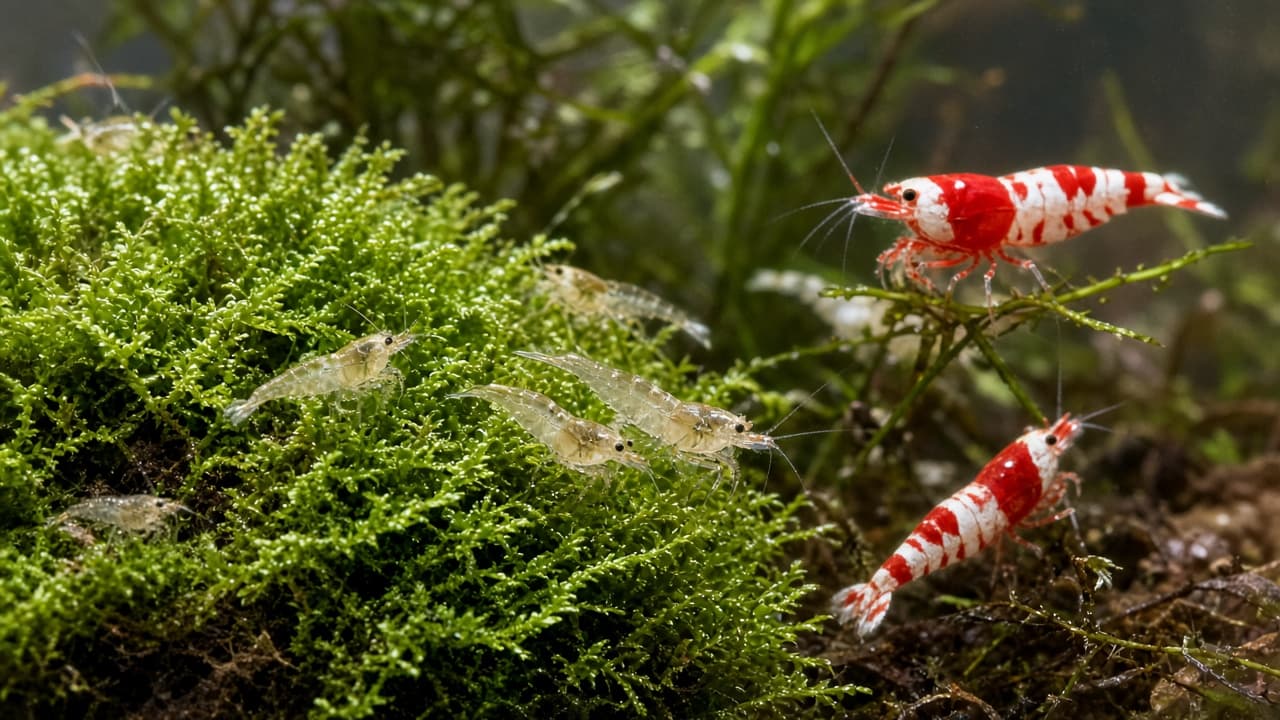
Tie moss to a mesh, a piece of wood or the whole back wall. The young need surface area, not just one clump in the corner.
Fine-leaved plants, leaves and small hollows in wood do the same job. Open sand in the middle of the tank gives almost no shelter.
Biofilm before food
A mature tank with a light film on glass and wood feeds shrimplets around the clock. Powdered food only helps if it lands where they sit.
Do not vacuum the substrate clean every week. Leave a thin film of detritus in the moss.
If the tank is too clean
• Add a dried leaf
• Borrow a pinch of mulm from a healthy tank
• Shorten the lighting period for a while
• Feed the adults a little more variety, not more in total
Leaves and microfauna
Oak leaves, catappa and similar leaves give fungus and tiny animals the young graze. They also soften the water a little, which many Caridina like.
Do not replace every leaf on the same day. Let them break down in stages.
Calmer water changes
Change less volume, more often. Match temperature and minerals. Pour the water against a plate or a piece of wood so the young are not washed around.
Avoid cleaning the filter and changing a lot of water on the same day a clutch hatches.
No fish in the breeding tank
If the goal is more shrimp, the fish should leave that tank. Even "shrimp-safe" species take the smallest ones.
Snails can stay. They compete a little for food, but they also add biofilm and clean up what the adults leave.
Feeding shrimplets
A fine baby food or crushed shrimp food, a pinch every other day, is enough. Remove what is not eaten within a couple of hours.
Overfeeding kills more young through poor water than starvation does in a mossy tank.
Patience over weeks
You rarely see the result the day after a change. Count clutches over two months. Then you know whether survival actually went up.
A colony that goes from zero visible young to five or ten per clutch is a clear win.
Conclusion
Higher shrimplet survival is built with shelter, biofilm and calm care. The filter, the moss and the water changes do more than any tin of baby food.
As the colony grows, the question of moving appears. Read on about when shrimp should actually change tanks – and when they should be left where they are.