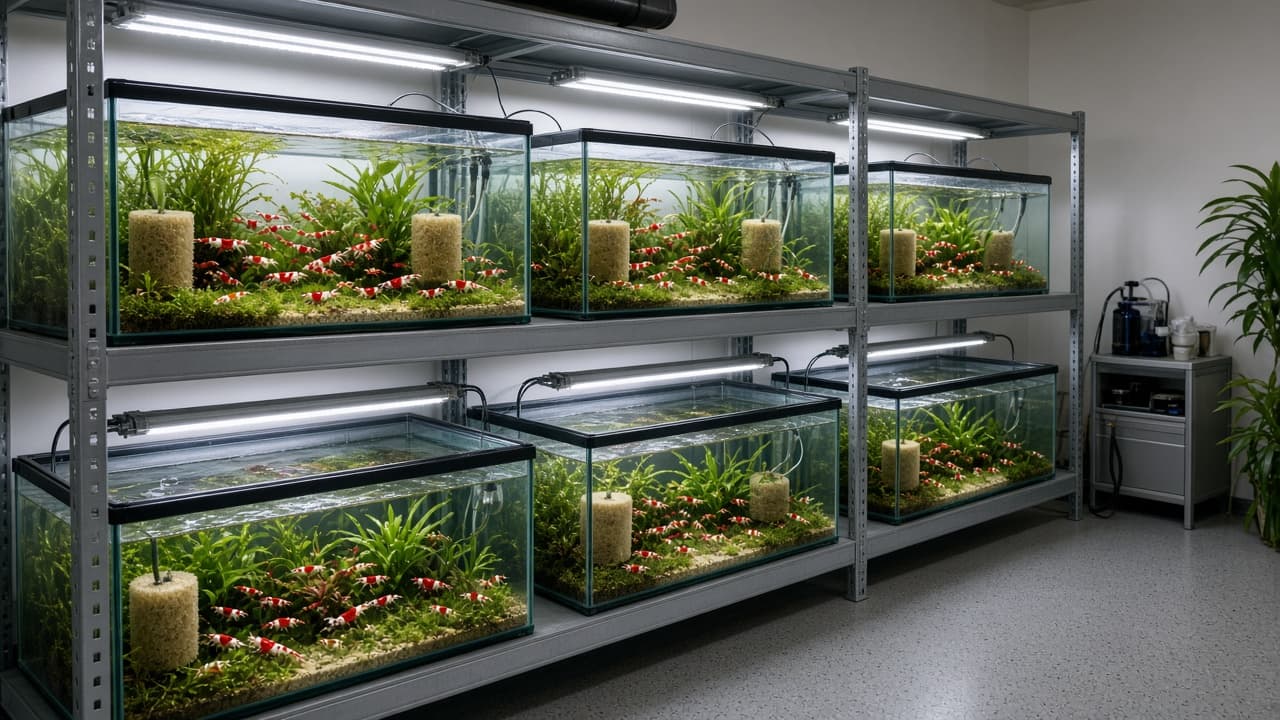
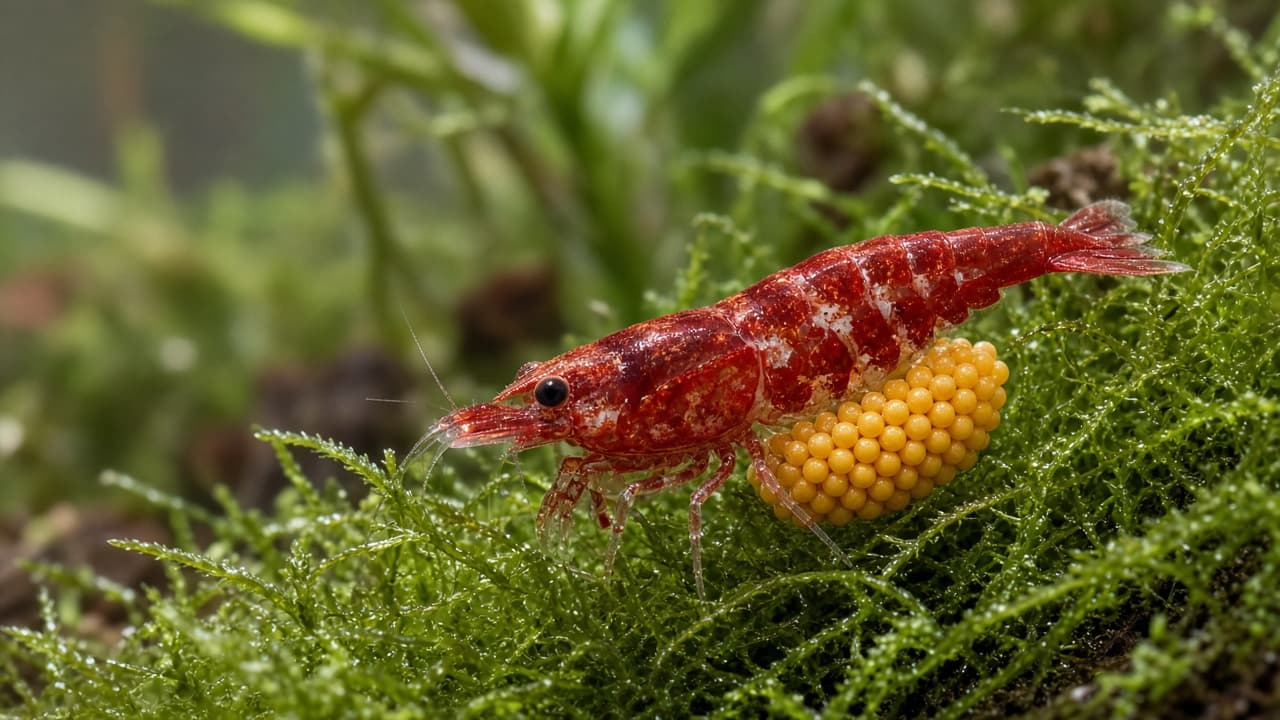
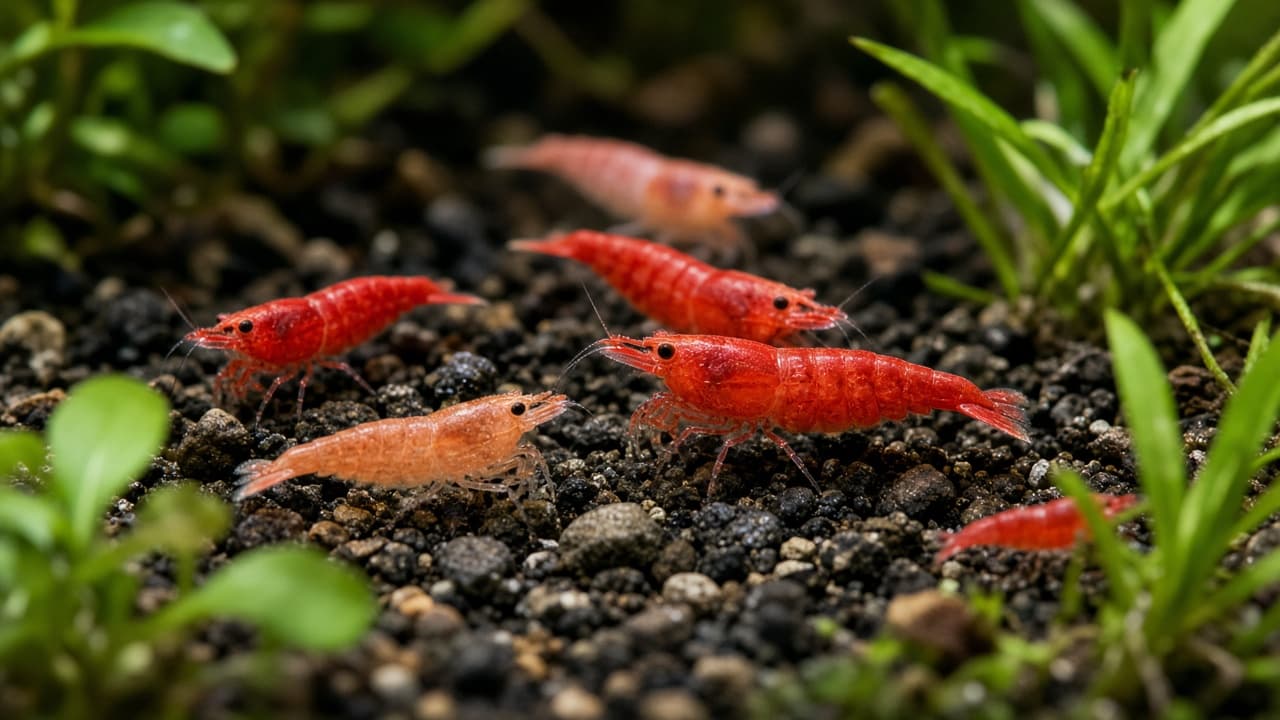
How to start your first shrimp aquarium
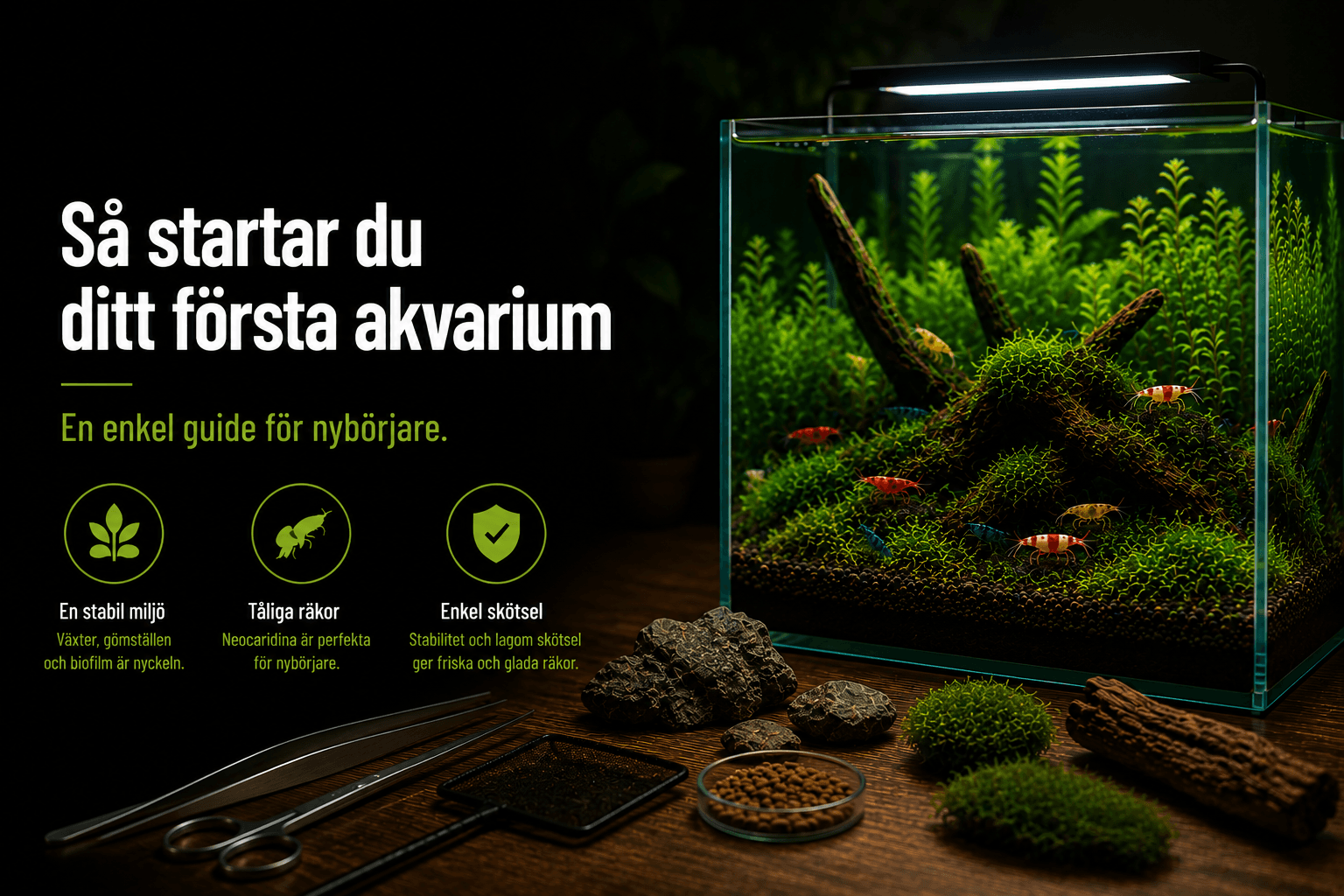
Starting a shrimp aquarium is much easier than many people think.
You don't need expensive equipment, advanced technology or years of experience. In fact, many of the most successful shrimp aquariums are based on a simple principle:
Stability before perfection.
If you give the shrimp the right environment, plenty of plants and time to establish, nature will often do the rest.
In this guide, we'll walk you through exactly how to start your first shrimp aquarium - step by step.
Step 1 – Choose the right aquarium
The first decision is size.
Many beginners are attracted to small nano aquariums because they take up less space.
But smaller aquariums are often more difficult to keep stable.
Therefore, we recommend:
20–30 litres
It gives:
✓ More stable water values
✓ More space for plants
✓ Better conditions for propagation
✓ Easier maintenance
If you have space, 40–60 liters also work perfectly.
Step 2 – Choose the right shrimp
For your first aquarium, we recommend Neocaridina.
Example:
• Bloody Mary
• Ride Sakura
• Blue Dream
• Blue Velvet
• Yellow
• Orange Sakura
These shrimp are hardy, easy to care for and work in most aquariums.
Feel free to wait with Crystal Red, Crystal Black and Blue Bolt until you have more experience.
Step 3 – Get the right equipment
You don't need much.
Basic equipment
• Aquarium
• Filters
• Lighting
• Thermometer
Many homes do not require a heater as shrimp thrive in normal room temperatures.
Important
The filter must be shrimp proof.
Small shrimp fry can otherwise be sucked into the filter.
Sponge filters or filters with protection over the intake work great.
Step 4 – Choose bottom material
For beginners, several options work.
Example:
• Dark sand
• Fine-grained gravel
• Inert soil
The dark bottom also means that the shrimp often show stronger colors.
Step 5 – Plant lots of plants
This is one of the most important steps.
Shrimp love plants.
Plants provide:
• Hiding places
• Biofilm
• Natural food
• More stable environment
Good plants from AquaShrimp's range are, for example:
• Hydrocotyle tripartita
• Schismatoglottis prietoi
• Hottonia palustris
Please complete with:
• Christmas Moss
• Java Moss
• Anubias
• Bucephalandra
The more plants the better.
Step 6 – Build hiding places
Shrimp want to feel safe.
Feel free to use:
• Roots
• Stones
• Mosses
• Plant groups
Shrimp fry in particular need many hiding places to feel safe.
Step 7 – Fill the aquarium
When the interior is ready, carefully fill with water.
If you are going to hold:
Neocaridina
Regular tap water usually works very well.
Caridina
Often need RO water and special minerals.
For your first aquarium, we recommend Neocaridina.
It makes the start much easier.
Step 8 – Drive in the aquarium
This is the step that many people want to skip.
Don't do it.
The aquarium needs time to build up the beneficial bacteria that break down waste.
Let the aquarium run in:
At least 3-4 weeks
before putting in some shrimp.
During this period, the aquarium begins to develop biofilm and a biological balance.
It is the foundation of a successful shrimp aquarium.
Step 9 – Introduce the shrimp
When the aquarium is in, it's time.
We recommend starting with:
10–20 shrimp
Then they feel safer and you get a natural colony faster.
Always acclimatize the shrimp slowly.
Rapid changes in water values can cause stress.
Step 10 – Feed appropriately
One of the most common causes of problems is overfeeding.
Shrimp need much less food than most people think.
They eat:
• Biofilm
• Algae
• Plant residues
• Leaves
• Shrimp feed
Better to feed a little too little than a little too much.
What happens next?
Now the fun part begins.
In the first few months, you will notice how:
• The plants grow
• The shrimp will be safer
• The colors develop
• Small fry start to appear
A healthy shrimp aquarium often becomes more stable with each passing month.
Common beginner mistakes
Avoid these:
✗ Aquarium too small
✗ Too many shrimp at once
✗ Too much food
✗ Too few plants
✗ Premature stocking of shrimp
✗ Large water changes all the time
✗ Chasing perfect water values
Remember that stable water values are almost always more important than perfect water values.
Our recommendation
If you want to maximize your chances of success:
• Aquarium 20–30 litres
• Bloody Mary, Blue Dream or Yellow
• Lots of plants
• Shrimp-proof filter
• 3–4 week break-in
• Patience
That recipe has helped thousands of aquarists succeed with their first shrimp.
Conclusion
Starting a shrimp aquarium is not about advanced technology or complicated water values.
It's about creating a stable and natural environment where the shrimp can thrive.
Start simple.
Plant a lot.
Be patient.
Then you have a good chance to soon experience what makes the shrimp hobby so special - to see your first colony grow and multiply in an aquarium you built from scratch.
In the next article, we'll go over exactly what gear is really needed—and what you can skip.