Introducing new shrimp to an existing colony
Adding new shrimp to a tank that already works is not the same as starting over. The existing colony has grown used to that exact water, and the new animals come from another.
The goal is to let the new ones in without shocking either them or the residents. That takes a little patience, not more equipment.
Why an existing colony is sensitive
A mature aquarium looks stable precisely because nothing new has happened for a while. New shrimp can bring stress, different water values and, at worst, disease.
A group of Red Sakura that has lived quietly for months can react if the water is suddenly mixed with bag water from transport.
Match the water first
Compare temperature, GH, KH and TDS if you can. The closer the values, the shorter the transition needs to be. The greater the difference, the slower it should go.
Do not pour the bag water into the aquarium. That water has collected waste during transport and should not go in with Blue Navy or Yellow that already feel well.
Quarantine or not?
The safest option is a small, mature quarantine tank for one to two weeks. Then you can see if any shrimp become sluggish, develop coatings or die before the whole colony is exposed.
If you only have one aquarium, be extra careful about the source and about watching the first days. Do not buy shrimp from a tank where several already lie dead.
The transition itself
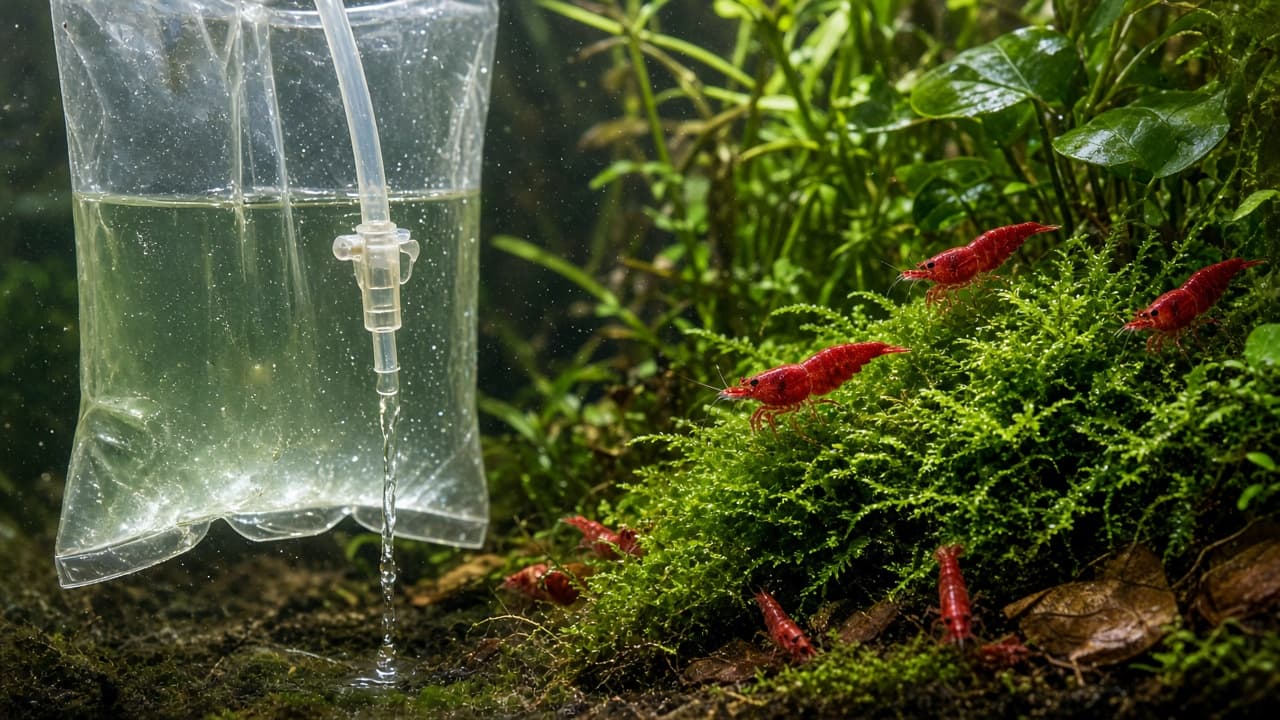
Let the bag float so the temperature evens out. Then drip aquarium water slowly into a bowl or bag, so the new shrimp get used to your water.
When the values are close, lift the shrimp across with a net or cup. Do not pour. The details of drip acclimatisation are familiar from the basics, but the point here is different: protect the colony that is already there.
How many should you add?
Do not add more than the tank can clearly support. A handful of new Bloody Mary in a stable group is easier than doubling the numbers in one evening.
Several new shrimp at once can be better than a single one, because a lone newcomer easily stays shy. But the amount still has to fit the water and the feeding.
Do not mix colours unless you mean to
New Orange Sakura in a tank of Red Sakura will interbreed. After a few generations both lines fade towards more natural colours.
If you want to keep the colour, only add the same variety. Crystal Red does not belong in a tap-water tank with Blue Diamond, even if both look red or blue in photos.
Amano in a Neocaridina colony
Amano do not interbreed with Neocaridina. They can live in the same water if the values suit both. Still give them time when they move in; they are larger and can disturb the smaller shrimp on the first day.
The first days
Keep the light low. No extra food the first evening. Watch for shrimp lying on their side, sitting still at the surface or not moving their gills.
Remove dead animals quickly. A single death after transport happens. Several dead in a row means the water or the transition did not match.
When it goes wrong
• The new shrimp hide for days and stop grazing
• The residents suddenly become sluggish after bag water was poured in
• Moults fail in the week after the move
• You see coatings, white fluff or unusual spots
Do not make large water changes in panic. Check temperature and TDS, feed less and let the tank rest. Big actions on top of a poor introduction rarely improve things.
A calm routine
Buy from a healthy colony. Match the water. Do not add bag water. Watch for two days. Feed as usual only when the new shrimp graze together with the residents.
Once you can add shrimp without disturbing the balance, you have left the most uncertain beginner stage. Keep learning about water, feeding and temperature, so the colony can grow at the same calm pace.