Reading shrimp behaviour
Shrimp rarely say something is wrong by looking ill first. They change how they move, where they sit and when they eat.
Once you know the colony's normal pace, it becomes easier to spot both comfort and early problems. It is one of the most useful skills at intermediate level.
This guide covers common behaviours and what they usually mean. One shrimp sitting still is rarely the same thing as a whole colony doing it.
What a normal tank looks like
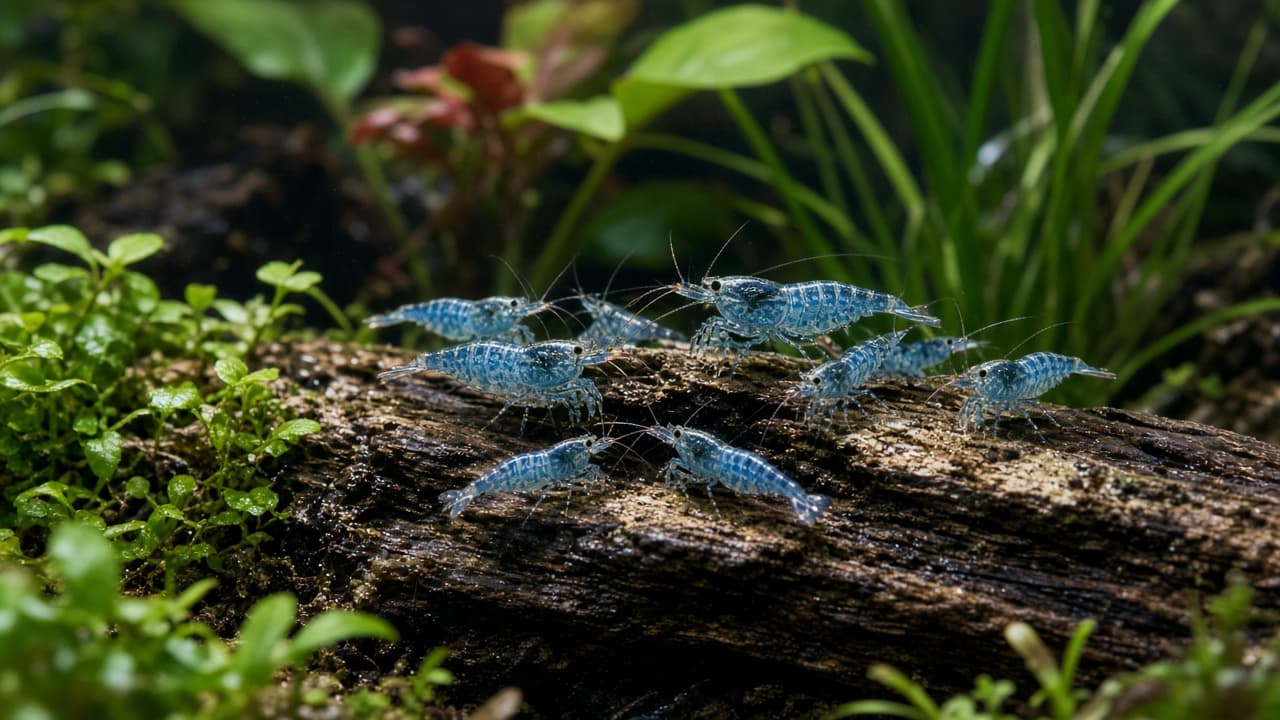
In a healthy tank someone is always moving. Blue Diamond and Red Sakura graze on glass, moss and wood. They pause, groom and move on.
Calm activity all day is a better sign than a short rush at feeding time and then an empty tank.
Activity and foraging
When you add food, several shrimp should find it within a few minutes. They gather, pick and back away from each other without causing harm.
If the food sits untouched for a long time, or if only one or two come forward, the colony is either full, stressed or too small.
Sitting still
A shrimp that sits on a leaf for a long time may be resting, close to a moult, or simply full. It becomes a sign only when many do the same and stop grazing.
Amano shrimp often sit more still than Neocaridina. Always compare against the species, not against a video online.
Swimming in open water
Short swims are normal, especially in younger animals or when someone is startled. Long, restless swimming along the surface or back and forth along the glass is something else.
Then you should think about oxygen, temperature, ammonia and whether you recently did a large water change.
Gathering in one place
Shrimp gather where there is food, warmer water or better oxygen. A cluster on the filter or at the surface can mean the water lower down is worse.
Common explanations
• Biofilm or food on that exact surface
• Stronger oxygen at the filter outlet
• A female that has just released pheromones
• A spot with a different temperature
Moulting
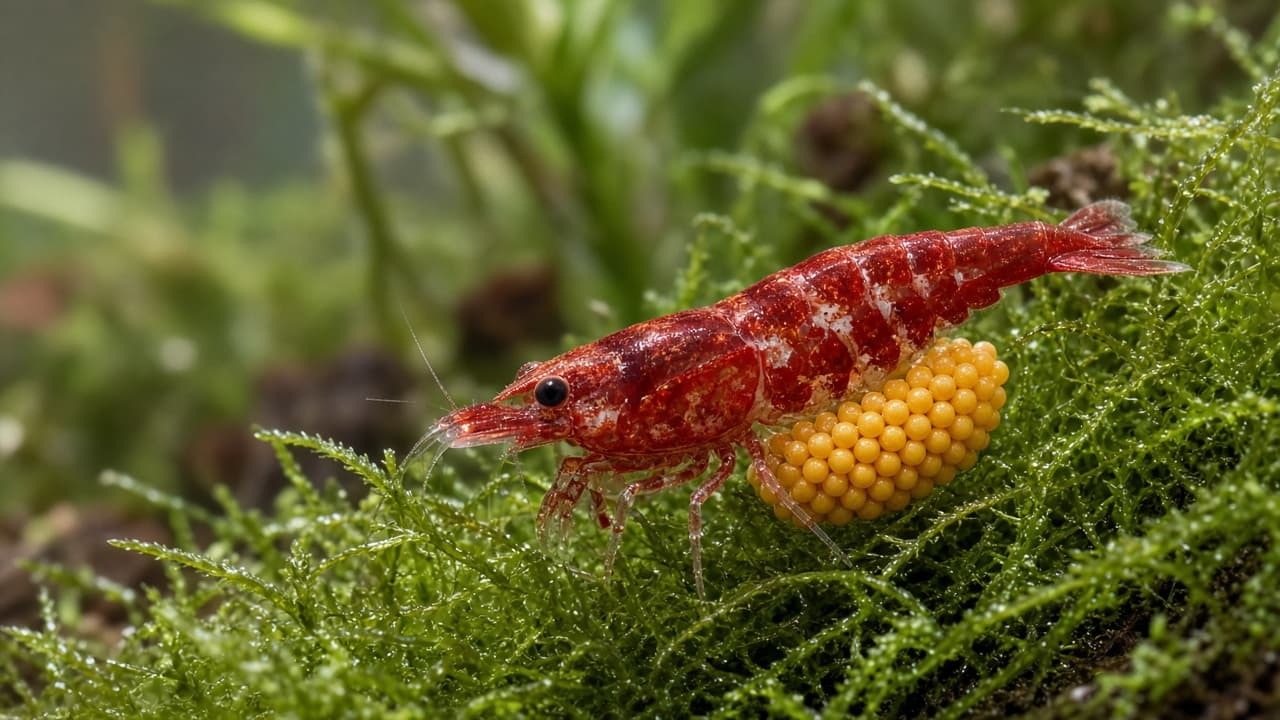
Before a moult the shrimp may hide, eat less and look cloudy. Afterwards the new shell is soft. The female or male then often sits still.
An empty shell on the substrate is not a dead shrimp. Look for eyes and a body before you worry.
Aggression and mating
Males may chase a female that has just moulted. It looks dramatic but is usually mating. Short shoving at food is also normal.
Real aggression with damaged antennae and animals hiding all the time is less common. Then the tank is often too small, too short on hiding places, or has too many males.
Night and day
Many shrimp come forward more when the light is dim. A tank that looks empty in the middle of the day can be full of life in the evening.
So look both with the light on and a while after it goes off, especially if you wonder where the shrimplets go.
When you should worry
• The whole colony sits still for more than a day
• Several swim restlessly at the same time
• Nobody comes to food for two days
• Shrimp gather at the surface and stay there
Then you measure the water and think back to what changed last. The behaviour is the signal. The values are usually the explanation.
Conclusion
Get to know this colony. When you know how Bloody Mary behaves on an ordinary Tuesday, you notice Wednesday's change quickly.
Behaviour is tightly linked to the substrate and the water. The next step is to understand the difference between active soil and an inert substrate – and how that choice affects both the shrimp and the care.