RO Water and Remineralisation
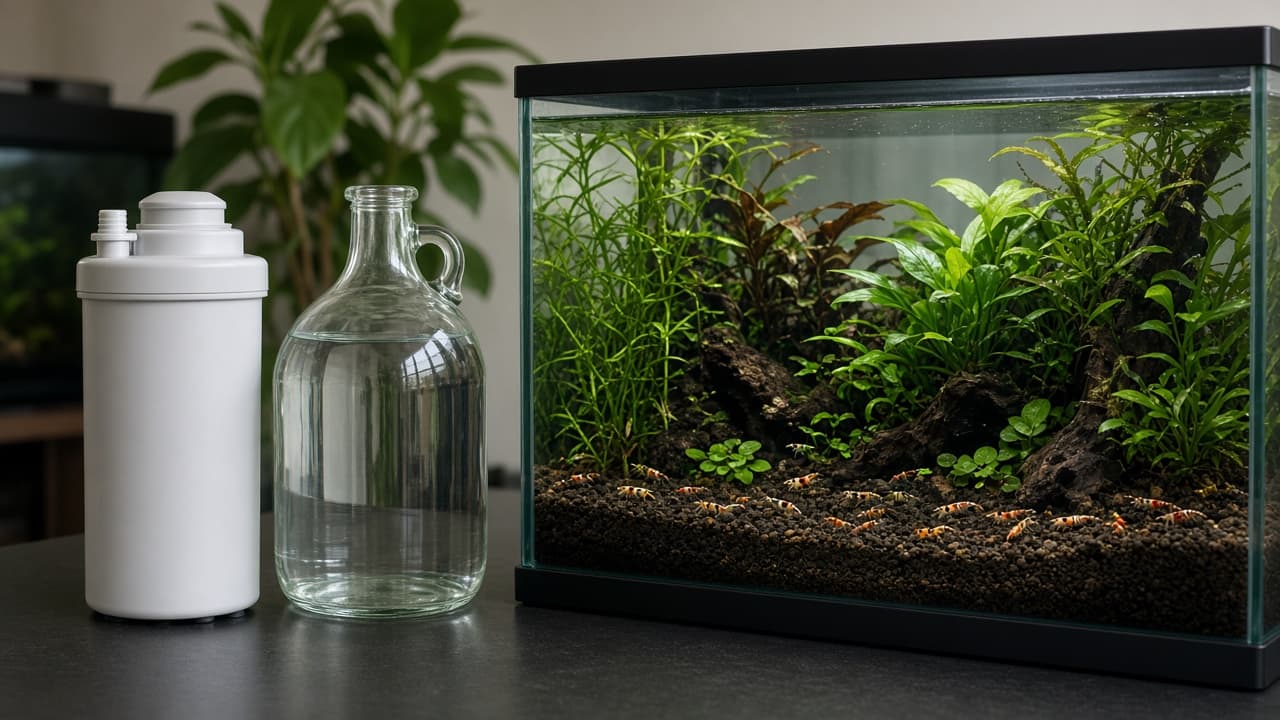
RO water gives you a clean base. Remineralisation gives the shrimp what they actually need.
Without that control you chase the moods of tap water. With it, the same recipe can keep Crystal Red and Blue Bolt stable month after month.
Why RO is used in shrimp breeding
Tap water changes with season, pipes and the municipality. Copper, nitrate and high KH can sit in the background without you seeing them.
RO removes most of that. Then you choose GH, KH and TDS yourself. That is why serious Caridina breeding almost always starts here.
What an RO filter actually removes
A reverse-osmosis filter pushes water through a membrane. Ions, metals and much organic matter stay on the wrong side.
A good system yields 0–10 ppm from the tap. Higher than that means a worn membrane, low pressure or a saturated prefilter.
Check the output
• Measure TDS on both inlet and product water
• Replace sediment and carbon filters in time
• Do not pour reject water into the tank because it looks clean
Choose membrane, pressure and output
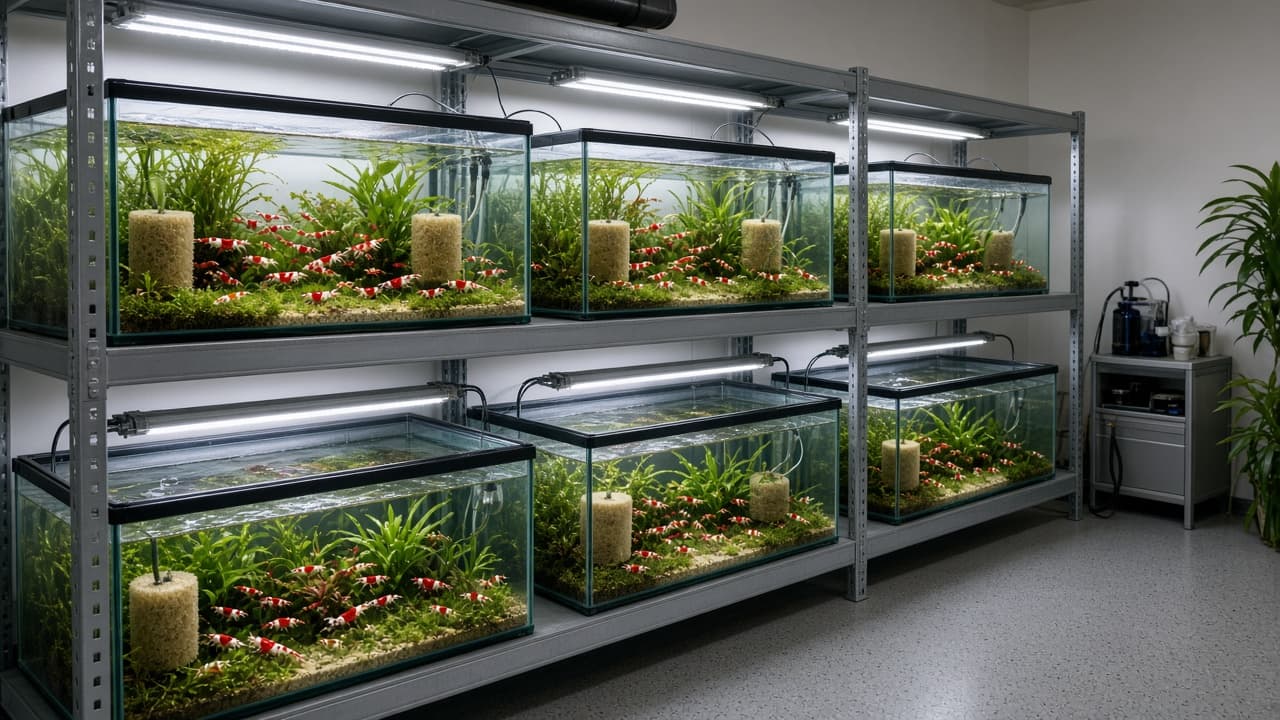
A small household unit is enough for a few tanks. A rack system needs more flow and a booster pump.
Work backwards from the week's water changes. It is better to produce ahead of time than to run the filter dry on an evening when the shrimp are already waiting.
Store RO water properly
Use clean jugs that are only used for water. Keep them dark and closed. Open vessels pick up dust and airborne spores.
RO water is aggressive toward metal. Do not leave it in copper pipes or galvanised vessels. Plastic or glass is safer.
Remineralise to the right GH and KH
Caridina such as Crystal Red, Crystal Black and Blue Bolt usually get GH salt without KH. The soil tank handles pH.
Neocaridina such as Bloody Mary and Red Sakura often do better with GH/KH salt. They want a little buffer, especially in tanks without active soil.
One working recipe per group
Always mix in a jug, never in the tank. Stir until the powder is gone. Let the water rest, then measure.
• Bee shrimp: GH 4–6, KH near 0, TDS 90–130
• Blue Bolt: the same family, preferably toward the lower end
• Neocaridina: GH 6–8, KH 2–4, TDS 180–230
Write down grams per litre for your exact salt. Brands weigh differently.
Check the result before you pour
Measure TDS, GH and temperature in the jug. Compare with the tank. If the jug is more than 15 ppm off, adjust the jug.
pH in the jug does not need to match the tank, especially when soil is in charge. GH and TDS should be close.
Common mistakes
• Mixing in a little tap water without measuring
• Using aquarium salt or traces that are not shrimp mineral
• Forgetting that RO water has no minerals at all
• Changing the membrane too rarely and treating 40 ppm as RO
When tap water still works
A hardy Red Sakura colony in decent municipal water can work. Then measure the same values you would with RO.
As soon as you aim for high-grade Crystal Red or sensitive Blue Bolt, tap water becomes a risk. RO is the calmer path.
Keep the recipe, not the exceptions
A written recipe beats memory. Same jug, same salt, same grams, same meter.
Once remineralisation is solid, you can move on to selective breeding. Keep reading at AquaShrimp and refine one step at a time.