Selective Breeding in Neocaridina
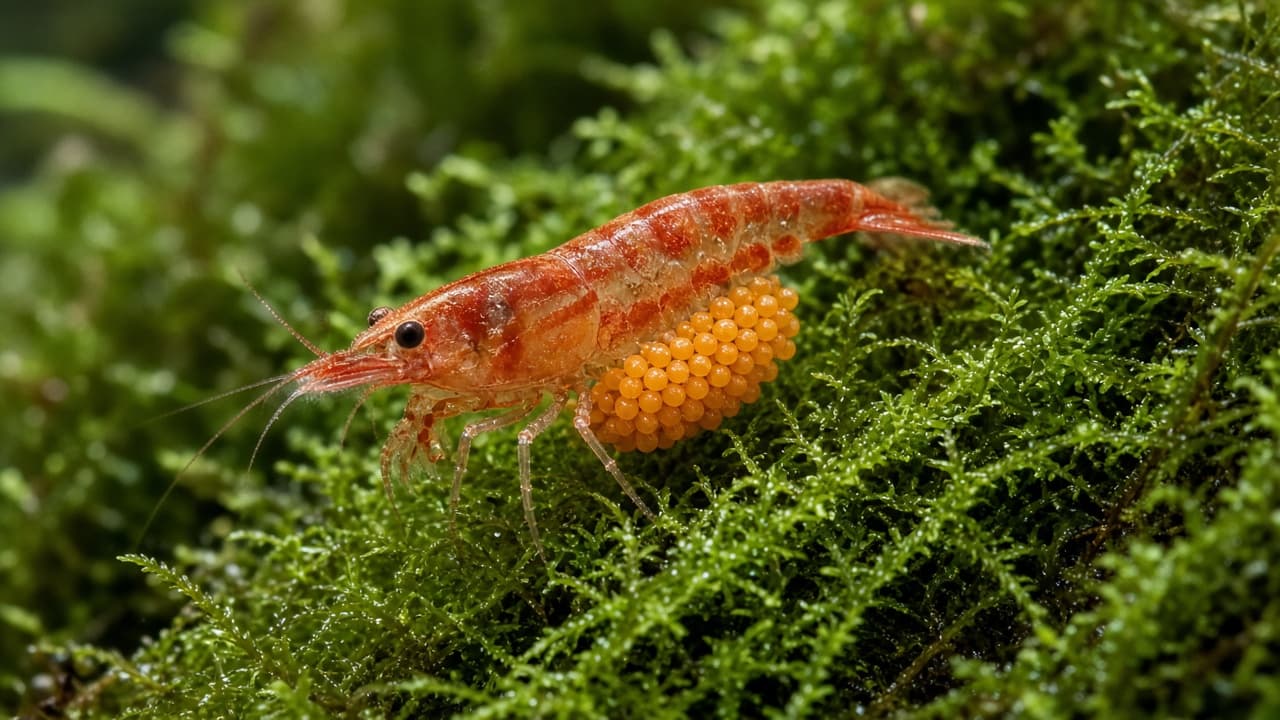
Selective breeding in Neocaridina is about choosing who gets to reproduce, not hoping for luck.
Bloody Mary and Red Sakura do not become even by themselves. They become even because someone, generation after generation, removes what does not meet the standard.
What selection means in practice
You look at a brood, keep the best and move or sell the rest. That is the whole method.
Without that move, the weak breed as readily as the strong. Then the colony slides back toward wilder colour.
Colour, coverage and evenness
In red Neocaridina you look at depth, coverage and whether colour runs onto the legs and rostrum. Translucent patches are the first to go.
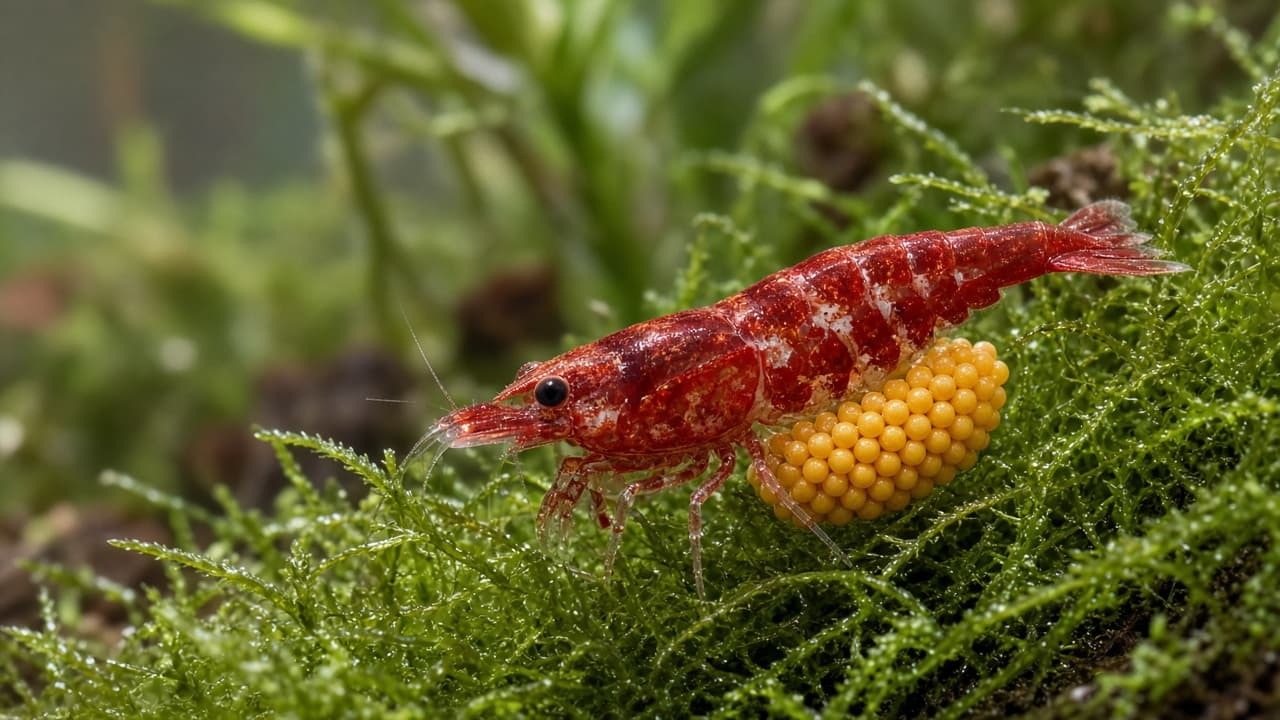
A Bloody Mary should read as a dark, even body. A Red Sakura should be red and closed, not mottled.
Three things to rank
• Even coverage before extreme depth on a blotchy body
• Health and size before colour
• Stable colour over several weeks, not only just after a molt
Sort every generation
Wait until the young have molted a few times. Colour lies early.
Sort in daylight or under the same lamp each time. A cool LED can make Red Sakura look paler than it is.
How many to keep
Keep more females than males, but not only the three prettiest. A too-narrow elite loses vigor.
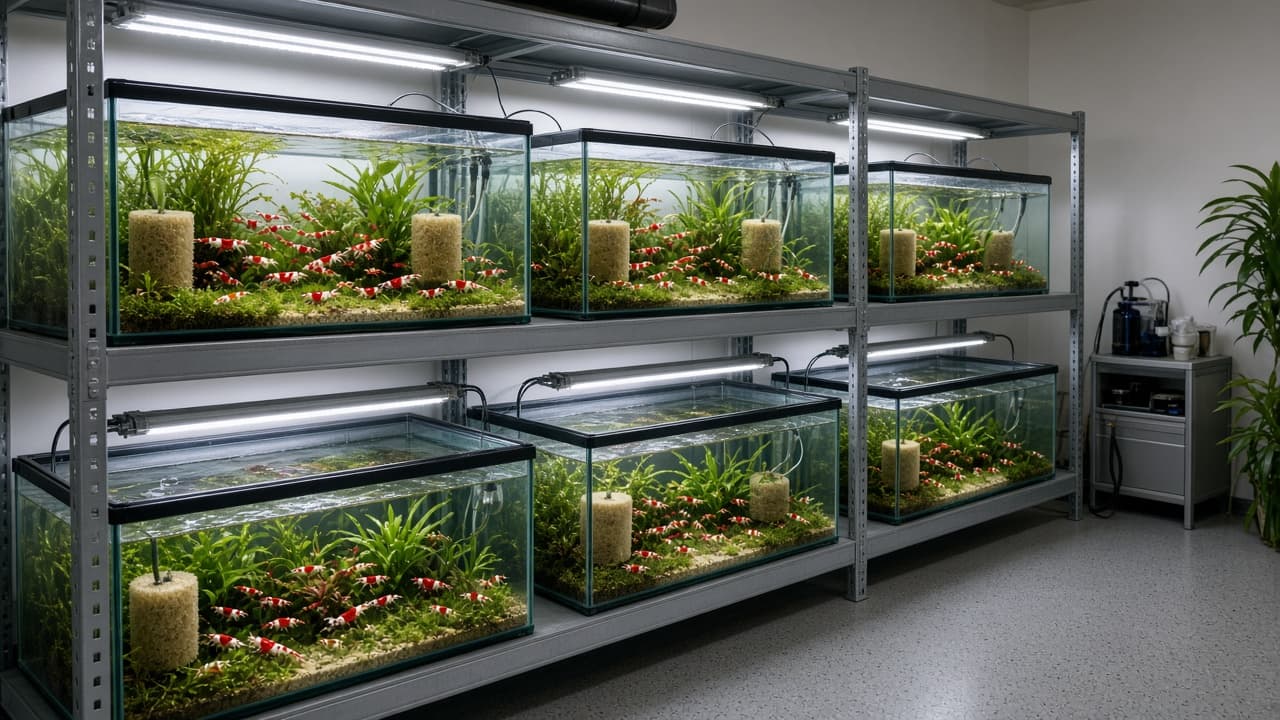
A working breeding group is often 15–30 adults. Below that, every death is a genetic loss.
Do not chase extreme colour too fast
If you only keep the darkest Bloody Mary shrimp for three broods, you can get smaller clutches and weaker shells.
Keep a reserve group with good colour and good form. From there you can bring vigor back without letting in wild colour.
Males, females and pairing
Male colour often shows more weakly. Judge him extra carefully and do not add a pale male just because he is active.
A strong female with a weak male pulls the next brood down quickly. Replace the male rather than waiting out the problem.
When the colony loses colour
Stop selling the best. Move the pale ones. Check food, light and TDS before you blame genetics.
Sometimes it is only a crowded tank with too many young. Selection needs space.
Do not mix colours if the line must hold
Red and yellow Neocaridina quickly produce unclean young. A temporary mix in a shop tank is one thing. A breeding tank is another.
Keep Red Sakura apart. Keep Bloody Mary apart. Label the tanks.
Record what you actually do
Write which brood, how many you kept and why. Otherwise you repeat the same mistake in six months.
Once Neocaridina selection is in place, compare it with Caridina. Keep reading at AquaShrimp and let the next generation be clearer than this one.