Shrimp diseases and problems
Most shrimp that die do so from water, stress or a failed moult. True disease is less common than forums make it look.
That does not mean you should ignore white growths, limping animals or sudden deaths. It means you start with the water, not with medicine.
Here we cover the problems you actually meet in a home tank, and how to tell a sick shrimp from a colony that is simply unstable.
Most problems are not disease
After a large water change, a new fertiliser or a move, shrimp may sit still, lose colour or hide. That is often stress.
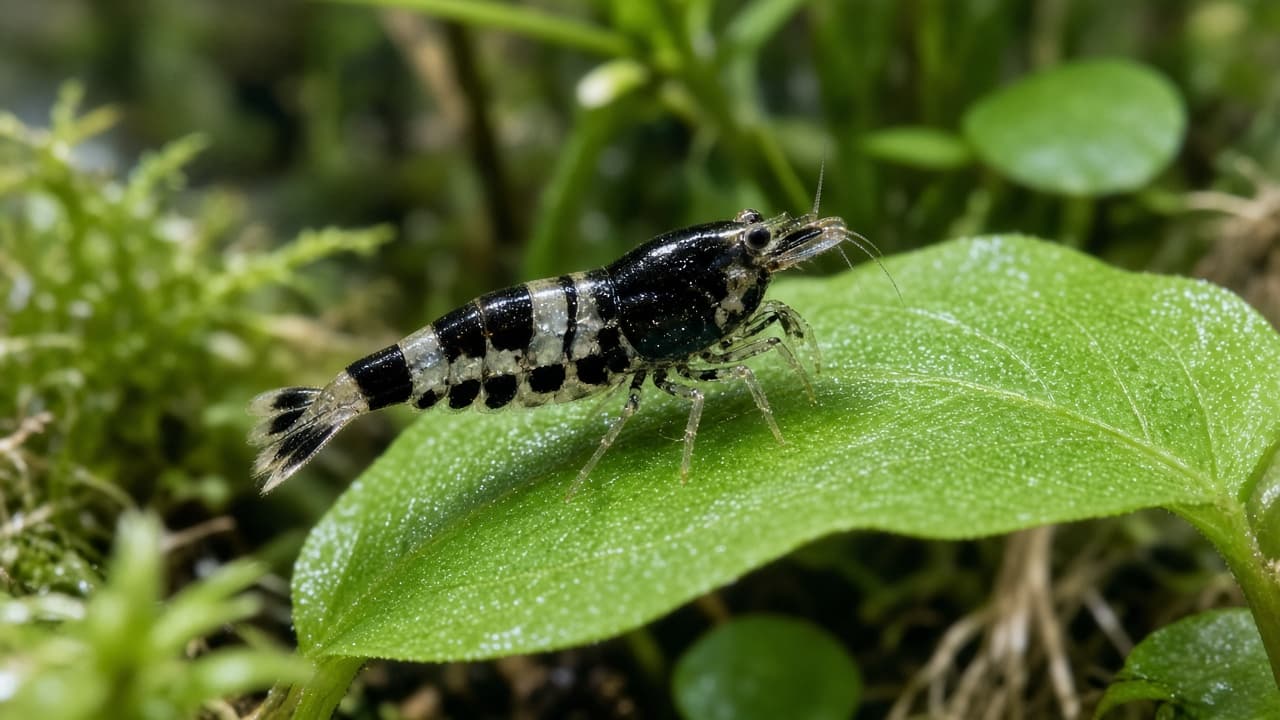
Test ammonia, nitrite, nitrate, pH, GH and KH before you look for a parasite. With Caridina such as Crystal Black and Blue Bolt, check TDS as well.
Bacterial infections
Bacterial problems sometimes show as milky patches, reddish sores, or shrimp that stop eating and die one after another. They can follow poor water quality or a tank that has just crashed.
Salt baths and broad medication are easy to get wrong, especially with copper. Isolate if you can, improve the water, feed sparingly and avoid moving animals to other tanks.
Fungus and growths
White fluff on a dead egg or a carcass is common. White fluff on a living shrimp, especially around a wound after a poor moult, is more serious.
Remove dead animals quickly. Do not leave a dead Bloody Mary under a piece of wood for several days. It loads the water and gives fungus more to grow on.
Parasites you can see
Scutariella shows as small white, short threads around the rostrum. Ellobiopsidae, sometimes called green fungus, shows as green or dark outgrowths under the abdomen.
What you do
• Look at several animals, not just one
• Isolate clearly affected shrimp if you have a spare tank
• Do not raise the temperature at random
• Do not use fish medication that contains copper
A little Scutariella on an Amano in an otherwise healthy tank is not the same as an outbreak in a Crystal colony. Judge the spread before you treat the whole tank.
Failed moults
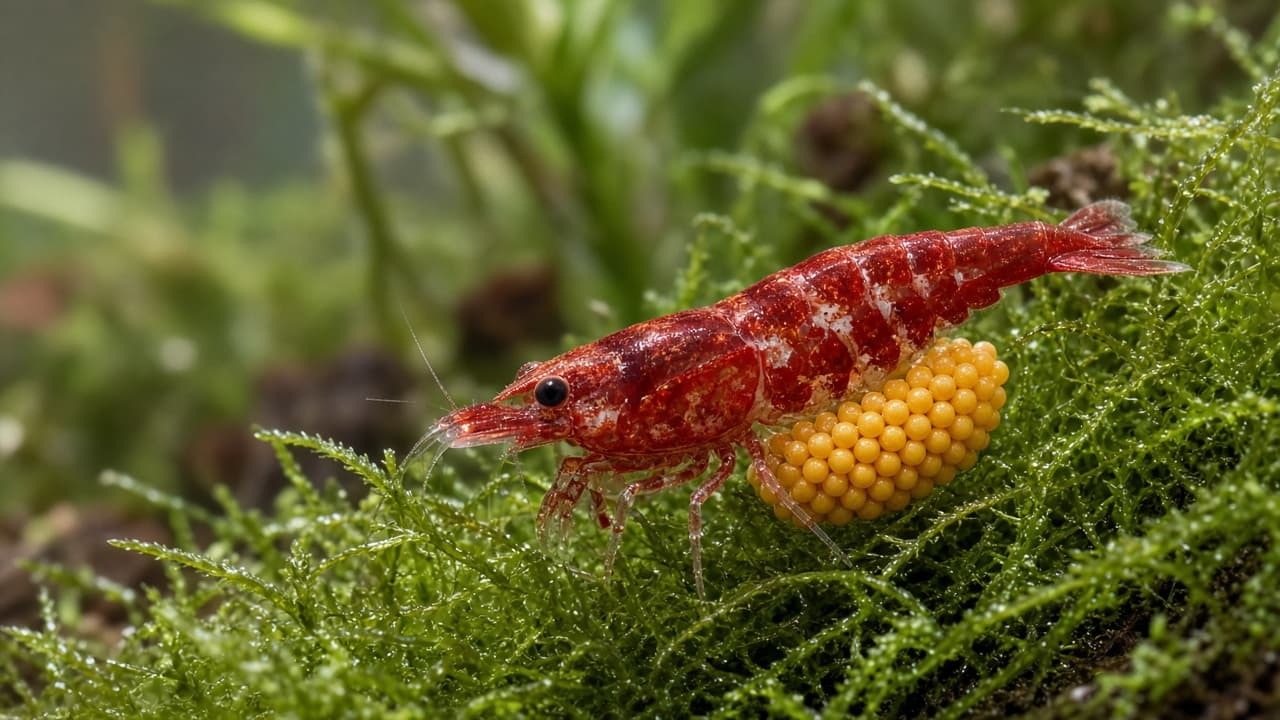
The shrimp sticks in the old shell, gets a white ring around the neck, or lies on its side after moulting. It is one of the most common causes of death.
The cause is often the wrong GH, water changes that are too fast, or poor nutrition over time. It is rarely something contagious between shrimp.
The water behind the symptoms
• Ammonia or nitrite above zero
• KH and pH jumping after soil or large changes
• Copper from medication, pipes or some fertilisers
• Low oxygen after dying algae or after overfeeding
Several deaths in one night more often point to water than to a slow parasite.
What you do first
Stop. Do not feed. Do not change half the water in a panic. Measure, note what you recently changed, and make a small, matched water adjustment if the values are wrong.
If only one animal looks bad and the values are fine, watch it for a day. A shrimp about to moult can look unwell for a short time.
When you should isolate
Isolate if you see clear outgrowths, open sores that are spreading, or if you must treat with something that should not go into the main tank.
A quarantine tank should be cycled. A bare plastic tub with no filter is a last resort, not a treatment.
Prevention
Quarantine new shrimp when you can. Do not share nets and hoses between a sick tank and a healthy one. Do not buy animals from a tank where the seller cannot tell you what the water looks like.
Stable care prevents more than any bottle on the shelf.
Conclusion
Learn to recognise stress, a poor moult and poor water before you put a name on a disease. Most colonies are saved with calm and measurement, not with a cure.
The next step is to read the shrimp before they fall ill: behaviour often tells you something is coming, several days before anyone lies on their side.