Shrimplet survival
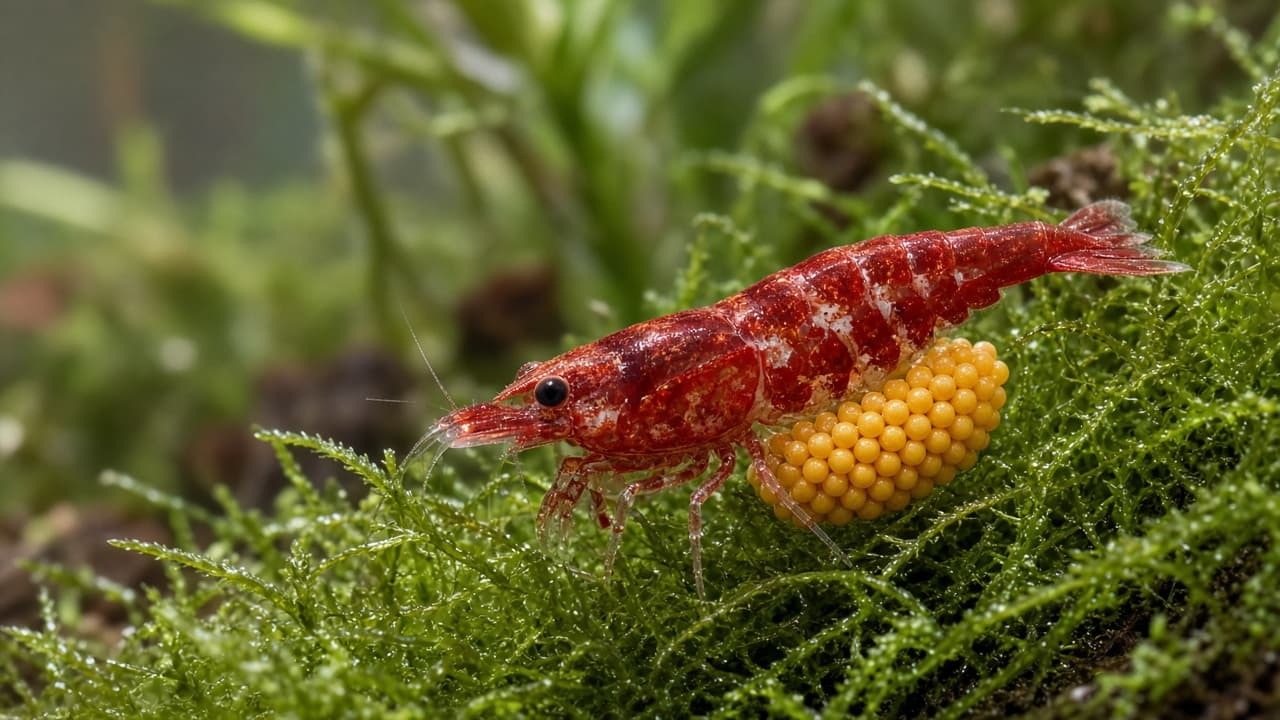
It is common to see a berried female and then almost no shrimplets. That does not always mean something is seriously wrong.
A female may carry thirty eggs. Perhaps five to fifteen of the young are visible after a few weeks. Some hide. Some become food. Some do not survive the first moults. That is how a shrimp tank works.
At this level the goal is not to save every shrimplet. The goal is to understand where they go, and to remove the most common reasons a whole clutch disappears.
Why so many shrimplets disappear
Shrimplets are small, soft and slow. They have no territory and no parent guarding them. They survive if they find food, shelter and water that does not swing.
When almost nothing is visible after a clutch, there is usually a practical explanation. Filter, tank mates or too little biofilm are the three most common.
Filters and intakes
An open filter intake can pull in newly hatched shrimp without you noticing. This is especially true of internal filters and strong canister filters without a guard.
A sponge filter, or a tight guard over the intake, makes a large difference. Shrimplets can sit on the sponge and graze, instead of disappearing into the filter.
Fish and other tank mates
Many fish that leave adult shrimp alone will still eat shrimplets. Even small tetras, rasboras and some corydoras can take the smallest ones.
• Adult shrimp are rarely the problem
• Snails do not normally eat healthy shrimplets
• Amano shrimp may rummage in moss but rarely hunt young
• Fish are the most common biological cause
If you want to grow the colony in earnest, a fish-free shrimp tank is the simplest step.
Food the young can actually find
Shrimplets do not eat a whole food wafer on the substrate. They graze biofilm, microorganisms and very fine food sitting on surfaces.
A newly started, bare tank may be enough for adults, but not for the young. Moss, leaves and a substrate that is not vacuumed every week matter more than extra crushed food.
Moss and hiding places
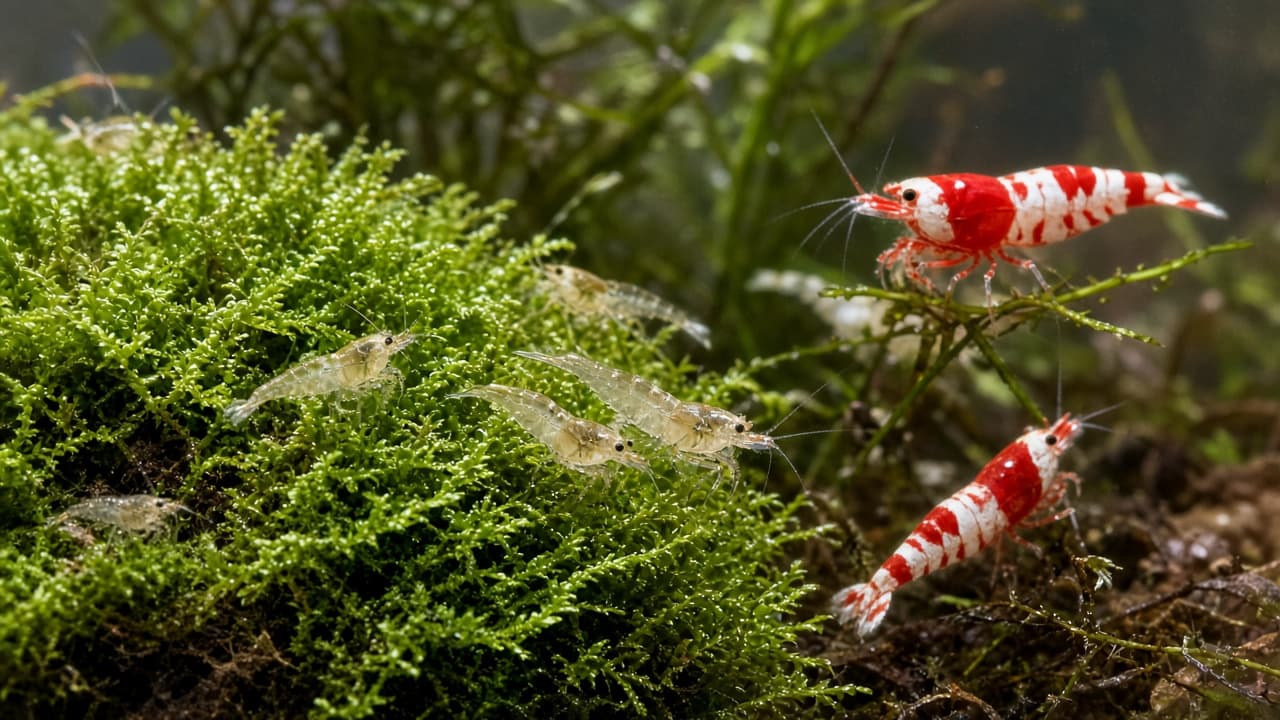
Christmas Moss, Java Moss and similar plants work as both feeding ground and shelter. The young sit there, moult there and avoid the current there.
A tank with only large leaves and open sand gives fewer hiding places. Crystal Red and Crystal Black, which are already more demanding, then lose more shrimplets than a hardy Blue Diamond colony in the same layout.
Water quality for the smallest
Shrimplets tolerate sudden changes in temperature, TDS and pH poorly. A large water change the day after hatching can be worse than a little extra detritus in the tank.
What usually goes wrong
• Water changes that are too large at once
• A new tap-water mix used before it has settled
• Chemicals against algae or snails
• Copper in medication or fertiliser
The difference between Neocaridina and Caridina
Neocaridina such as Bloody Mary and Red Sakura often produce more surviving young in an ordinary planted tank. Caridina such as Crystal Red and Blue Bolt need more stable values, and clutches stay invisible longer if the water swings.
If Caridina females carry eggs but you never see shrimplets, start with the water and the filter before you change the food.
When the young are out of danger
After four to eight weeks most are large enough not to be pulled into a guarded filter. They show more clearly on the glass and start competing for the same food as the adults.
That is when you can start thinking about sorting. Before then, survival is the only job.
What is normal
A colony that grows slowly is often healthier than one that explodes and then stalls. A few invisible clutches at the start are common, especially in a young tank.
Worry when females stop carrying eggs, when adults die at the same time, or when the water turns milky. A quiet clutch is rarely the same thing as a crash.
Conclusion
Shrimplet survival is more about shelter, biofilm and a shrimp-safe filter than about special food. Expect some to disappear. Make sure the whole clutch does not vanish for the same avoidable reason.
Once you know why the young disappear, you can move on to raising survival on purpose – without making care more complicated than it needs to be.