Sorting shrimp by quality
Sorting is how a good-looking colony stays good-looking. Without it, colour and pattern slowly drift back toward the ordinary.
It does not have to be harsh or commercial. It is enough to look at the animals now and then and choose which ones may breed in the main tank.
Here we cover what quality means, when to start, and what you do with shrimp that do not meet the mark.
Why sorting is needed
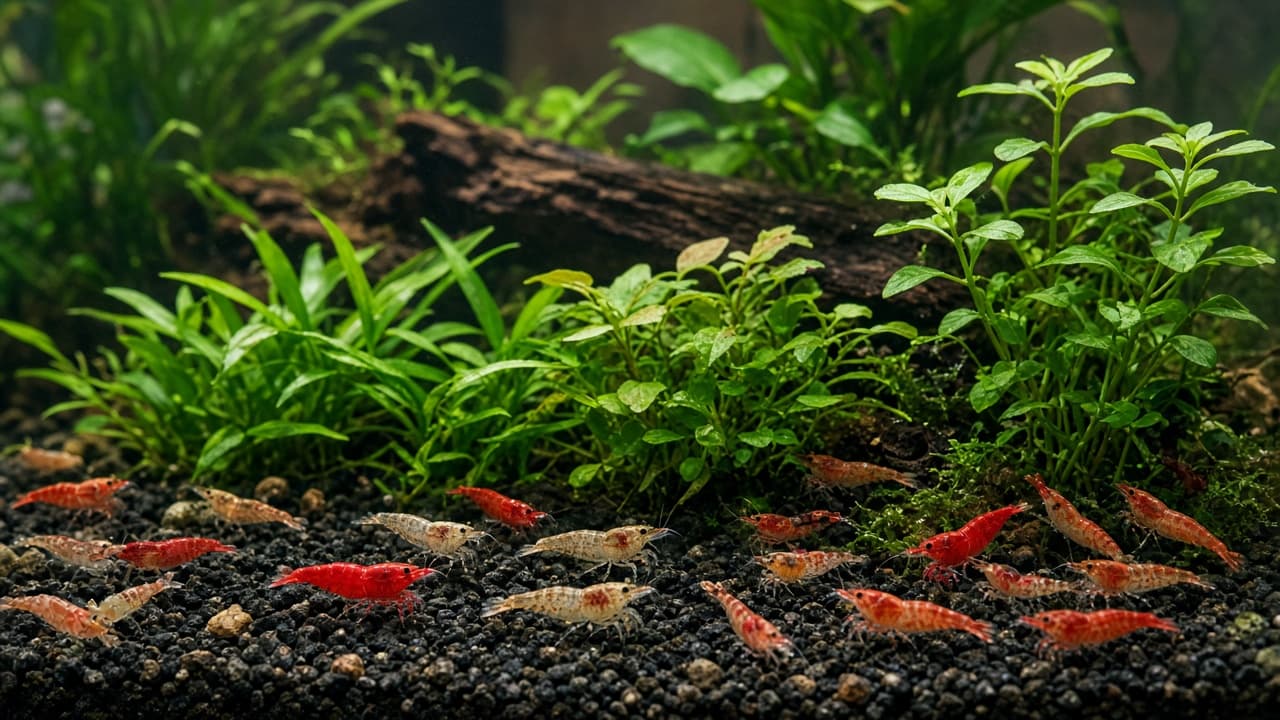
Every clutch produces variation. Some young are a deeper red, have sharper bands or more even coverage. Others are paler, patchy or more translucent.
If all of them stay and breed, numbers win, not quality. After a year a strong starter group can look like a mixed handful.
What quality means in Neocaridina
In Bloody Mary and Red Sakura you mostly look at coverage and depth. Colour should sit evenly across the body, ideally out onto the legs, without large clear patches.
• Even colour from head to tail
• Little or no translucency in the middle
• The same tone as the rest of the line
• No obvious brown or grey areas
A healthy but paler shrimp is not a bad shrimp. It is simply the wrong animal in the breeding tank.
What quality means in Caridina
In Crystal Red and Crystal Black it is about the bands: width, sharpness and contrast. In Blue Bolt you look at how cleanly blue and white meet, and whether the pattern is messy.
Grades such as S, SS and SSS are tools, not laws. At this level it is enough to compare the animals with each other in the same tank.
When you should start sorting
Wait until the young have adult colour. Many Neocaridina look pale in the first months and then colour up.
A useful rule is to look when the shrimp is near adult size and has moulted several times. Do not sort a clutch the week after hatching.
How to look at a shrimp
Lift it briefly into a small bowl of tank water. View it from the side against a light background. A phone flash straight at the glass often lies.
Look for
• Colour or pattern at rest, not only in motion
• The shell after a recent moult
• Deformed antennae or a crooked tail
• Whether the animal eats and moves normally
What you do with the weaker ones
You do not need to kill healthy shrimp to breed. Move them to a display tank, give them to someone who wants a mixed group, or let them live out their lives in a tank with no breeding goal.
What matters is that they do not go back into the line you are trying to keep clean.
How often you sort
Once a month is more than enough in a home tank. Some people only look when they do a larger water change, or when the colony starts to feel crowded.
Sort a little and often rather than emptying the tank twice a year and shocking the whole group.
Common mistakes
• Sorting too early, before the colour has settled
• Removing so many that the colony becomes too small
• Keeping a beautiful but frail shrimp in the breeding group
• Mixing "almost as good" animals back in
A line also needs genetic breadth. Keep several good females and males, not only the two best-looking ones.
A simple system
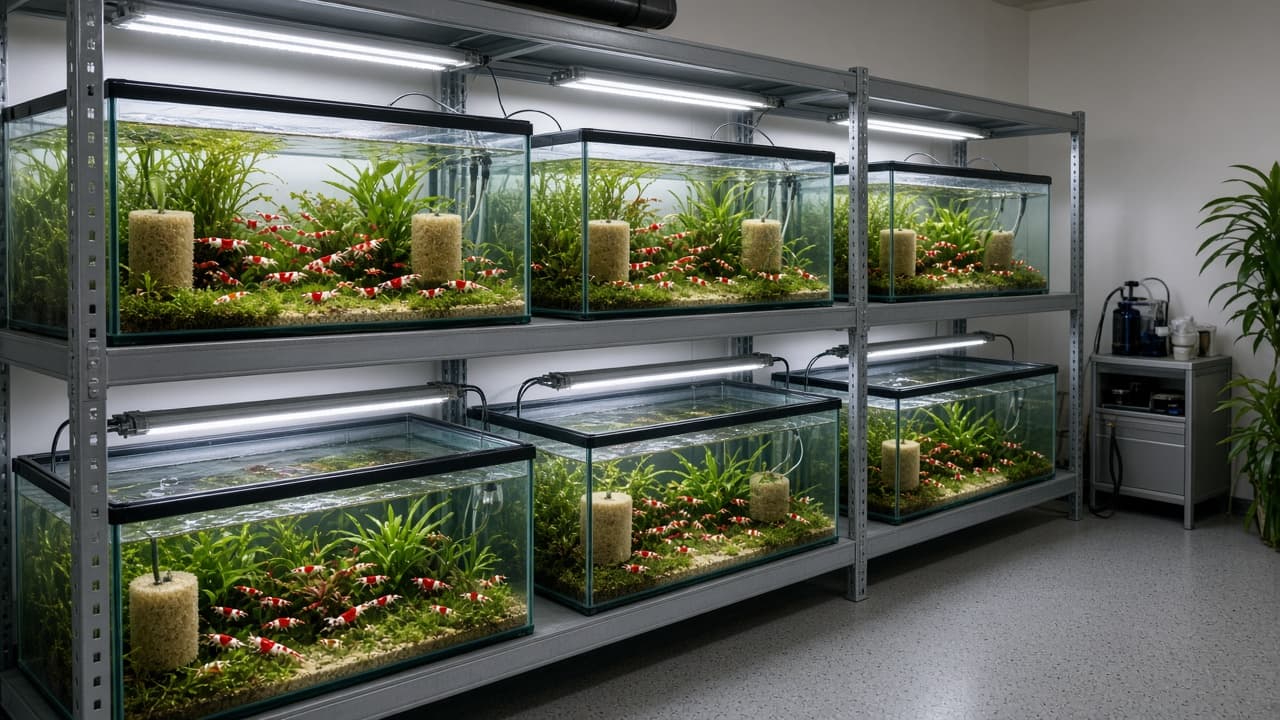
Keep the breeding group in one tank. Keep the culled animals in another, or sell them. Note roughly when you last looked. That is all.
When you later add more tanks, it becomes natural to have one tank for top animals and one for the rest.
Conclusion
Sorting is calm craft. You look, choose and move. The colony becomes clearer with each generation, without you chasing official grades.
When one tank is no longer enough for both breeding and display, it is time to think about breeding tanks and multiple setups.