When should you move shrimp to a new tank?
A move is always a strain. It should solve a clear problem, not just give you the feeling of doing something.
Shrimp settle into the exact tank they live in. New water, new substrate and a new bacterial flora take time, even if both tanks stand in the same room.
Here we cover when a move is justified, how to do it, and which animals you should leave alone.
Moving is always a risk
Common results are dropped eggs, a failed moult and a few days of hidden, still animals. In the worst case the most sensitive die, especially Crystal Red going from soil into different water.
So plan the move. Do not improvise it on a Sunday because the tank "feels crowded".
When it is justified
• You need to keep two colours apart
• You are sorting animals out of the breeding line
• The tank has fish that eat shrimplets
• You are going to rebuild the substrate or replace soil
• The colony is so dense that the water values swing
Crowding alone is rarely a reason to move everyone. Dwarf shrimp tolerate high density better than they tolerate an immature new tank.
When you should wait
Wait if the new tank is not cycled, if you recently had a crash, or if several females are late in their berried period.
Also wait if you are only unhappy with the hardscape. The shrimp care more about the water than about whether the stone looks neat.
The new tank must be ready
A cycled filter, measurable zeros for ammonia and nitrite, and preferably visible biofilm. Three to four weeks is a minimum for a new tank. An older, established filter shortens the time.
Match temperature, GH, KH and TDS as closely as you can before the first shrimp changes environment.
Acclimatising between tanks
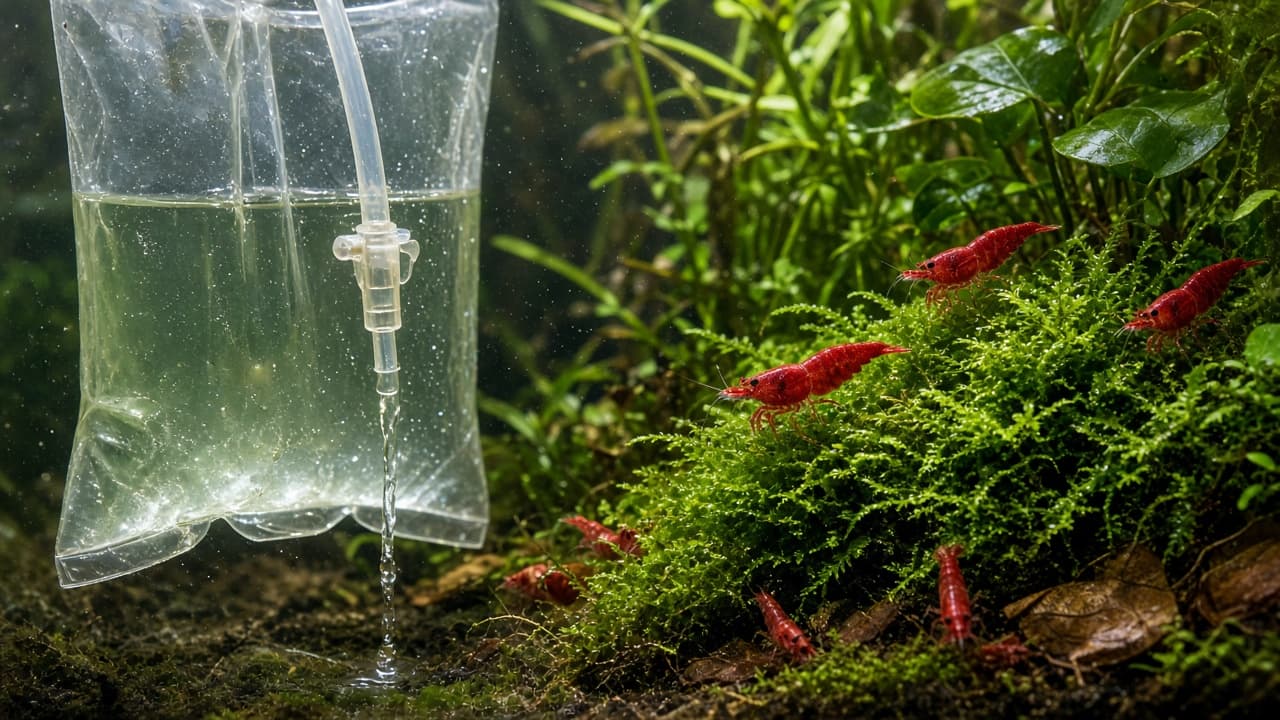
Drip acclimation is just as important between two home tanks as when animals arrive in the post. Half an hour to an hour is often enough if the values are already close.
If the gap is large, especially in pH or TDS, take longer. Do not rush because Amano shrimp "are usually hardy".
Do this in short
• Net them gently, and avoid crushing antennae
• Drip the shrimp over into the new water
• Release them near moss or a piece of wood
• Dim or turn off the light for the first hours
Berried females
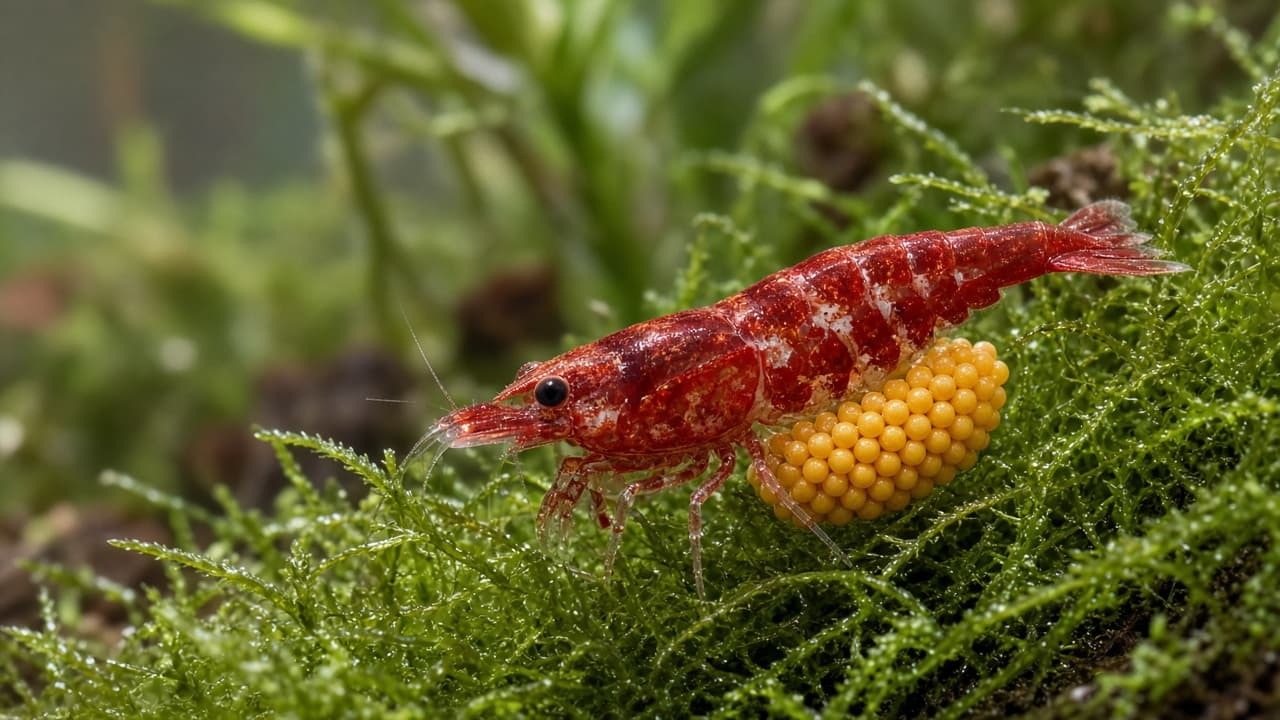
Leave them if you can. A move late in the carrying period often ends with the eggs being dropped.
If the whole colony must move, take the females last and extra slowly. Do not count on that clutch.
Shrimplets and small shrimp
Shrimplets are hard to net and easy to crush. Move the adults and let the small ones grow in the old tank, or move the moss they sit in as a clump.
A clump of moss in a bowl of old water is often safer than chasing every young shrimp with a net.
Sorting as the reason
When you pick out weaker Red Sakura or unclean Crystal patterns, move only those animals. Leave the breeding group in the tank they already cope with.
That is a better use of a second tank than tearing up the whole line.
After the move
Feed sparingly for the first days. Watch for moults and animals sitting still. Do not do a large water change in the first week if the values are fine.
Colour can look paler for a while. That is often stress, not ruined genetics.
Conclusion
Move shrimp when the new tank is ready and when the move has a purpose. Leave berried females and tiny shrimplets if you can.
If the move is because the old tank turned milky or died, you also need to understand crashes. That is the next topic.