Product description
About the species
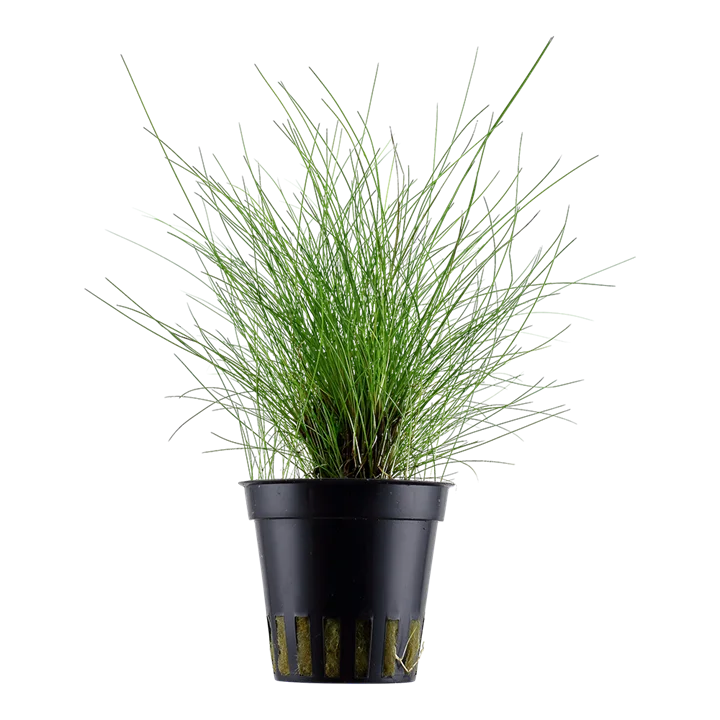
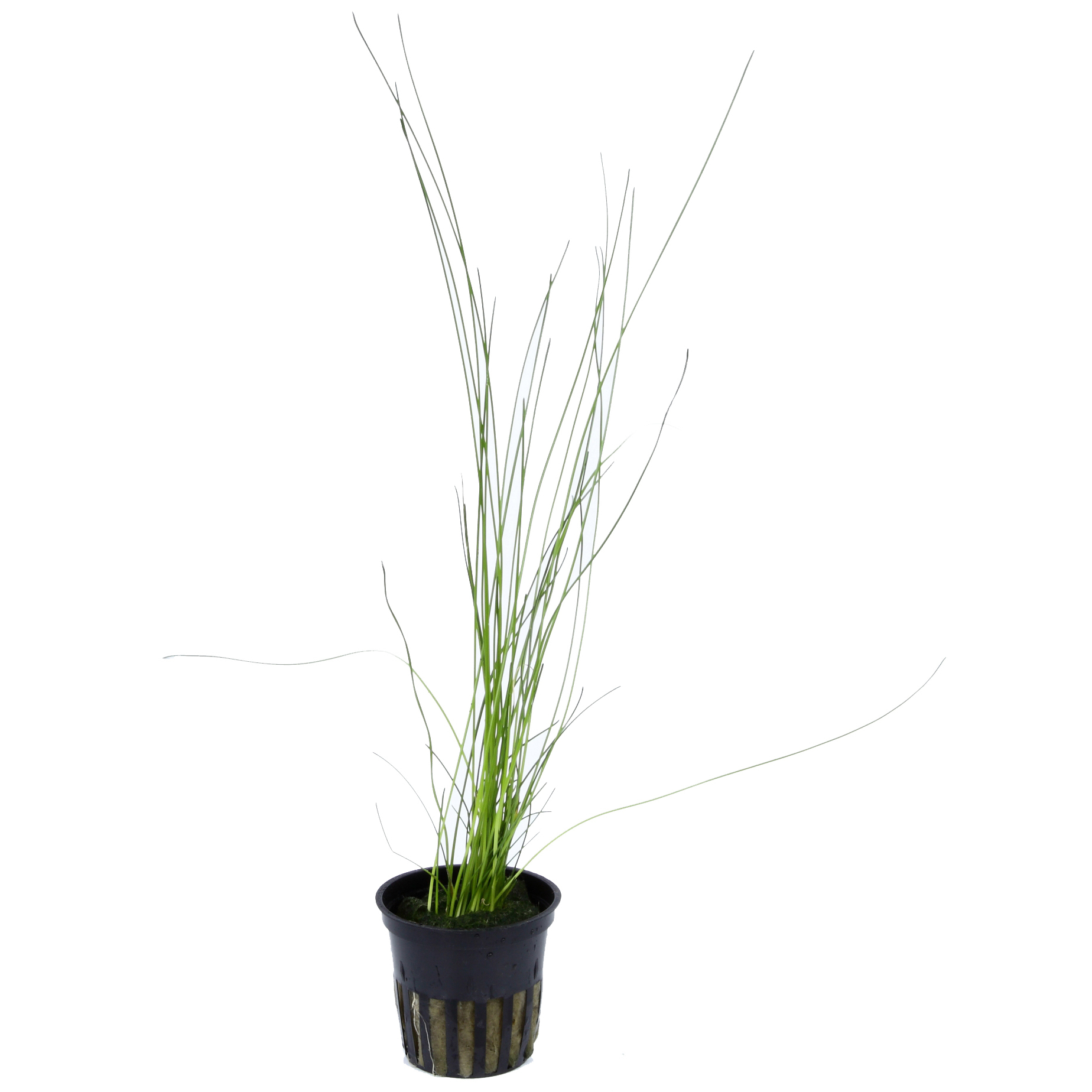
Eleocharis montevidensis is a tall American aquarium grass with fresh grass-green blades barely a millimetre thick. It grows 20–40 centimetres tall and keeps an airy, open habit that you can see straight through. The plant spreads by runners and builds a small reed landscape in the aquarium over time.
Facts
• Latin name: Eleocharis montevidensis
• Plant type: Runner plant
• Origin: North America
• Height: 20–30 cm
• Growth rate: Medium
• Position: Background
Light requirement
Low light requirement. It manages with the lighting that comes with most aquariums and is happy in partial shade behind or beneath taller plants. Strong lighting does not harm it, but raises the risk of algae on the leaves because the plant cannot use all the available light.
CO₂ & nutrition
Manages entirely without added CO₂, which makes it as suitable for a simple aquarium as for an aquascape. Liquid carbon or injected CO₂ speeds up growth but is never a requirement. Dose an all-round fertiliser with iron and micronutrients every week.
Planting
Plant the individual plants with their roots in the substrate and the crown free above it. The plant then spreads by itself with runners beneath the substrate and gradually fills out the area, so leave room around each plant from the start.
Carefully remove the pot and rinse the rock wool off the roots before planting — leftover rock wool can otherwise hinder rooting.
Care & propagation
Thin the runners where you do not want them and move the daughter plants where you want more. Cut them free with scissors rather than pulling, so the mother plant's roots stay put. A nutrient-rich substrate makes it spread considerably faster.
Position in the aquarium
Given its mature height it belongs at the back or along the sides, where it forms a dense wall of greenery and hides equipment. In a smaller aquarium it can also be used as a solitaire in one corner.
Difficulty level
🟢 Easy — grows in most aquariums without CO₂ and under ordinary lighting.
Delivery format
Delivered as a pot grown submerged, with the roots in rock wool. The pot holds several plants or stems that can be divided and planted separately.
Recommendation
A fine alternative to Vallisneria when you want height without broad leaves, both along the back wall and as sparse tufts further forward. Set a few tufts in the midground — its see-through habit adds depth to the layout.