Product description
About the species
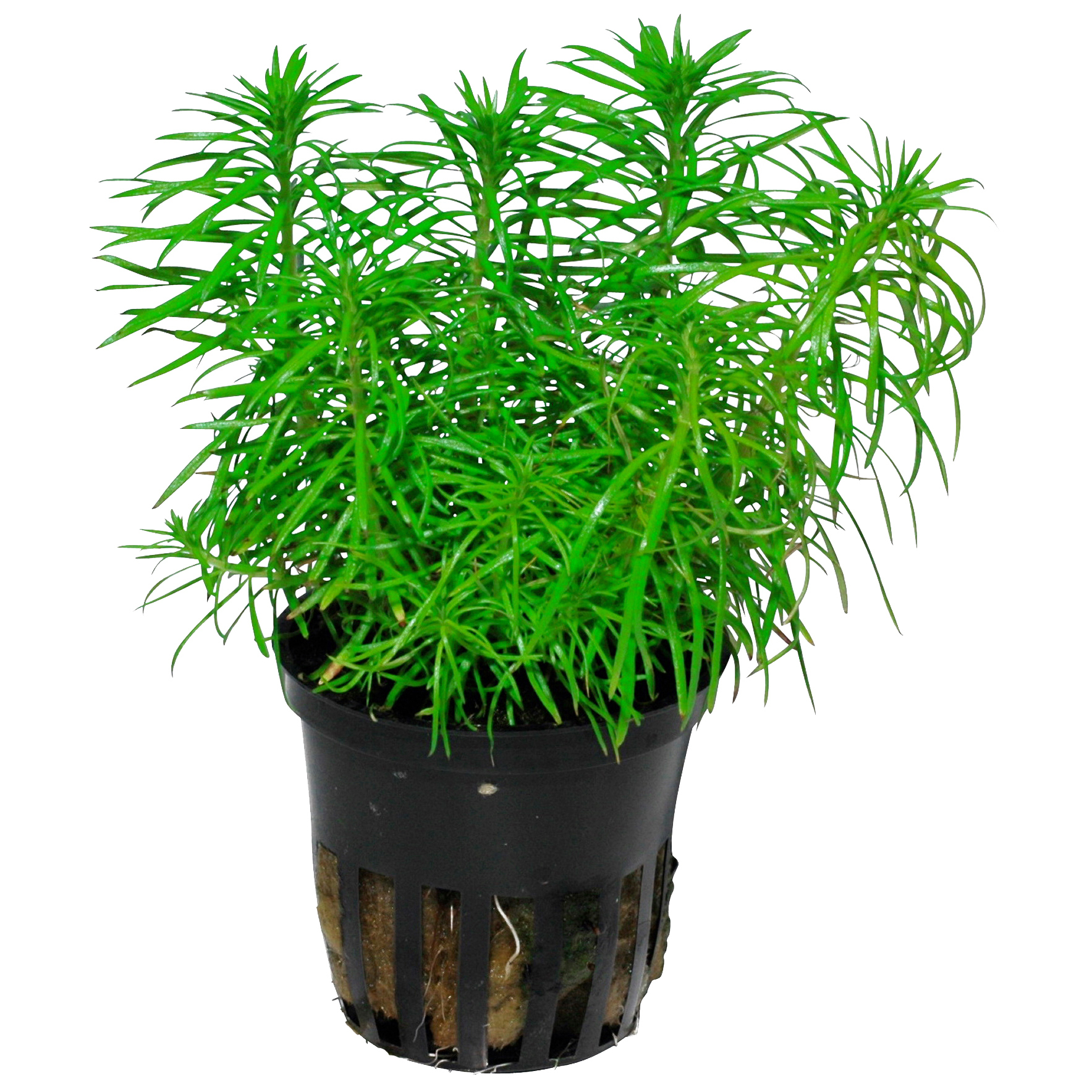
Pogostemon deccanensis from India has narrow, vivid green leaves in dense whorls that look like little conifers. The stems grow 15–40 centimetres tall and one to three centimetres wide, standing upright on vigorous roots. The species used to be called Pogostemon erectus and is still often sold under that name.
Facts
• Latin name: Pogostemon deccanensis
• Plant type: Stem plant
• Origin: Asia
• Height: 15–30 cm
• Growth rate: Medium
• Position: Background
Light requirement
Medium light requirement. Reckon on around 0.5 W per litre or a modern mid-range LED unit. Too little light gives sparse, stretched shoots and pale leaves, while the right amount keeps the plant compact and richly coloured.
CO₂ & nutrition
Added CO₂ is recommended — Tropica reckons 6–14 mg/l as a medium requirement. The plant can be grown without, but then grows more slowly and loses some of its colour. Supplement with liquid fertiliser weekly and keep iron and potassium levels up.
Planting
Split the bunch and set the stems one by one, about two centimetres into the substrate and two to three centimetres apart. Removing the lowest leaves first stops them rotting in the substrate. A group of five to ten stems looks far better straight away than single plants.
Carefully remove the pot and rinse the rock wool off the roots before planting — leftover rock wool can otherwise hinder rooting.
Care & propagation
Top the plant when it reaches the height you want and replant the cuttings — that propagates it and gives a denser group at the same time. Trim regularly so light reaches the lower leaves, and discard the old lower sections once they start thinning out.
Position in the aquarium
Given its mature height it belongs at the back or along the sides, where it forms a dense wall of greenery and hides equipment. In a smaller aquarium it can also be used as a solitaire in one corner.
Difficulty level
🟡 Moderate — wants stable lighting and regular fertilisation to look its best.
Delivery format
Delivered as a pot grown submerged, with the roots in rock wool. The pot holds several plants or stems that can be divided and planted separately.
Recommendation
Plant it in a dense group at the back or as a column behind the hardscape — the stiff, upright shape gives structure to a layout that would otherwise look rounded. Strong light keeps the whorls short and the group compact.