Product description
About the species
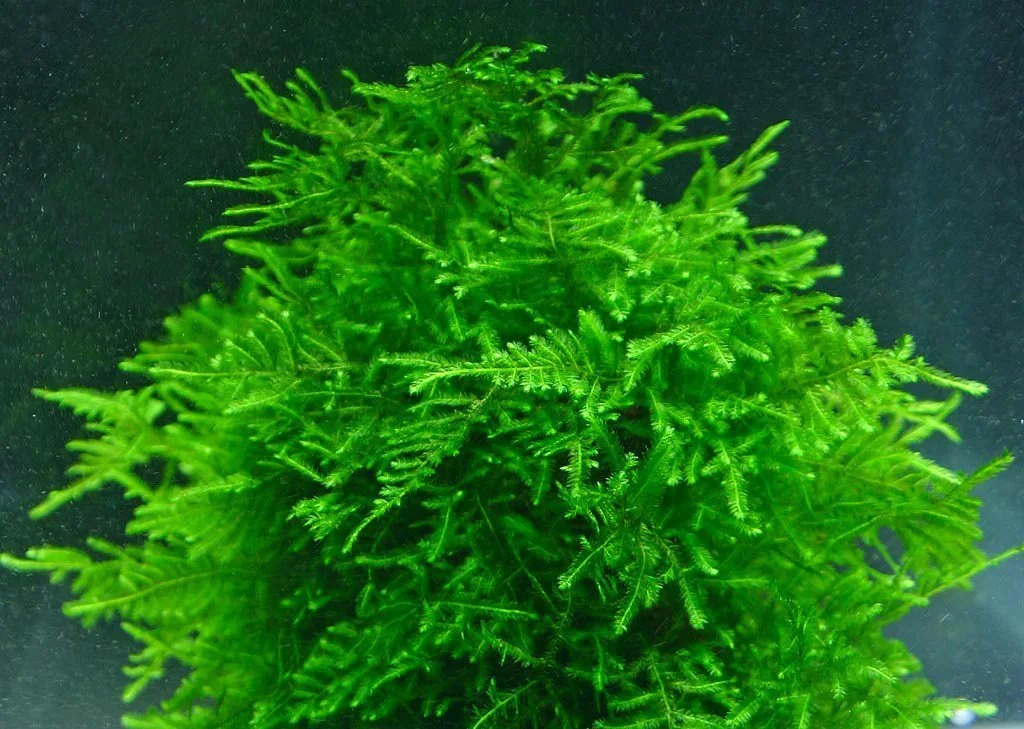
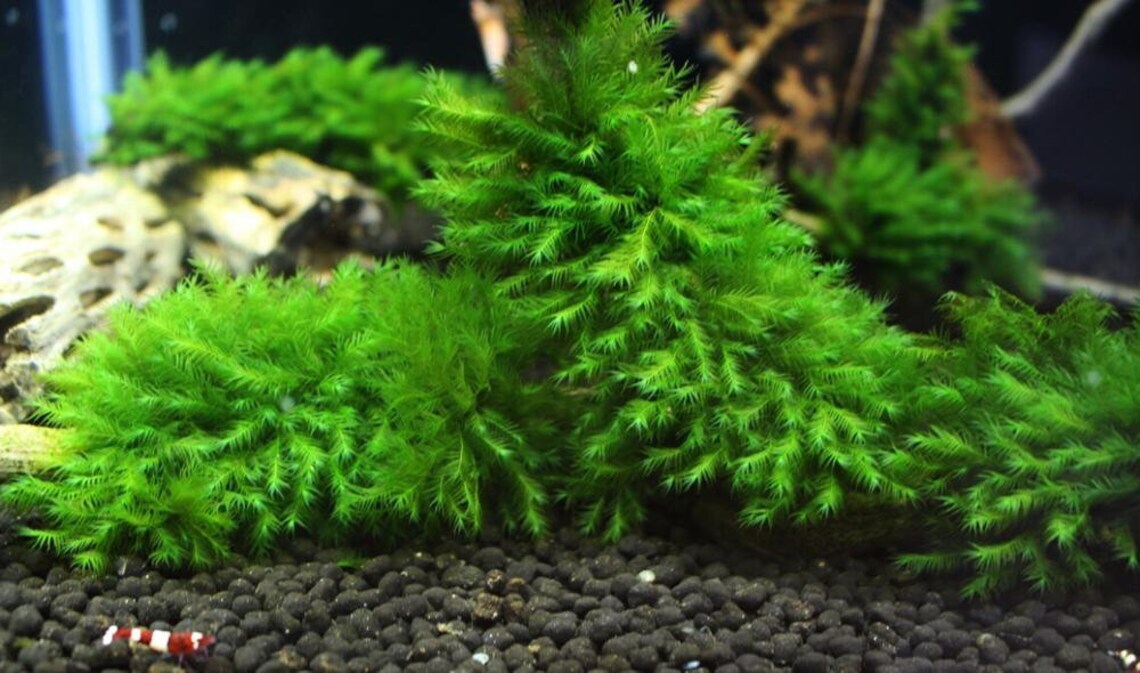
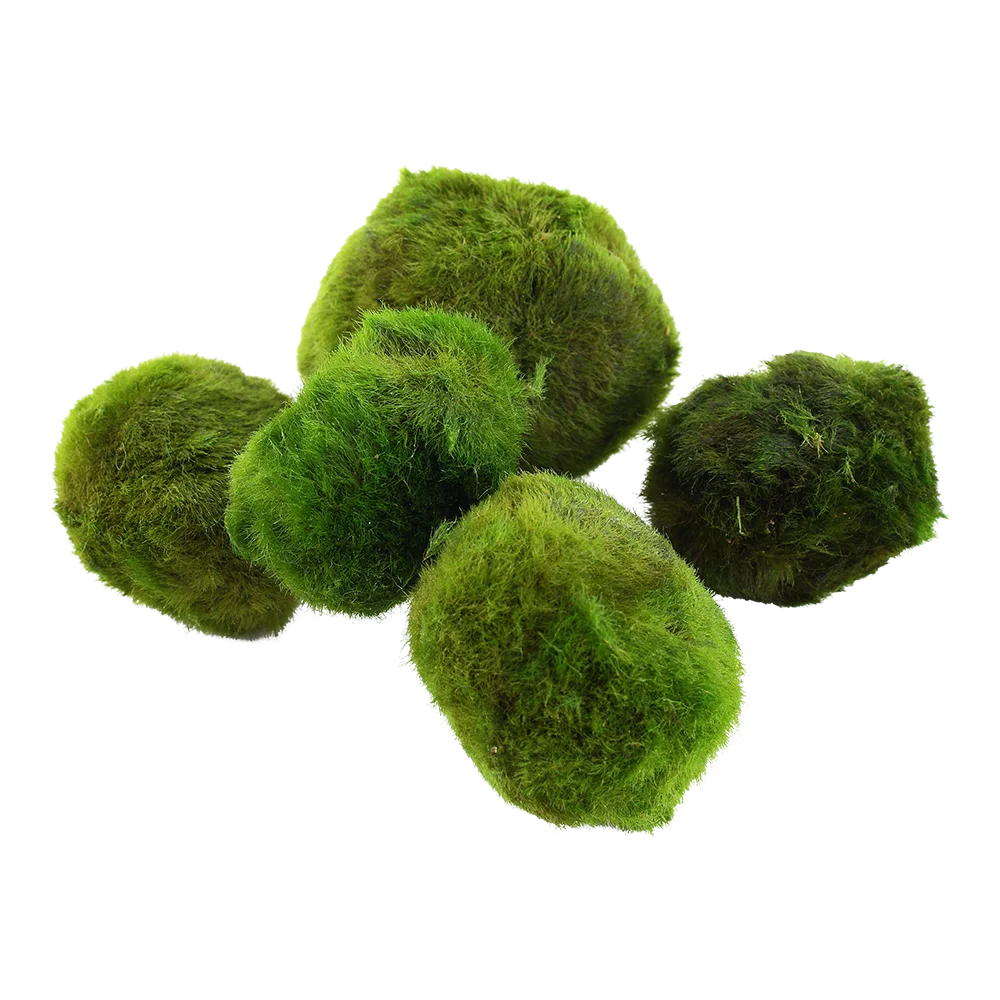
The moss ball is not really a plant but a spherical alga, and one of the few exceptions to the rule that algae have to go. In the wild it grows on shallow lake beds where the waves roll it into an even sphere. It is extremely hardy, grows slowly and becomes denser and darker green with the years.
Facts
• Latin name: Aegagropila linnaei
• Plant type: Algae ball
• Origin: Widespread worldwide
• Height: 3–10 cm
• Growth rate: Slow
• Position: Foreground
Light requirement
Low light requirement. It manages with the lighting that comes with most aquariums and is happy in partial shade behind or beneath taller plants. Strong lighting does not harm it, but raises the risk of algae on the leaves because the plant cannot use all the available light.
CO₂ & nutrition
Manages entirely without added CO₂, which makes it as suitable for a simple aquarium as for an aquascape. Liquid carbon or injected CO₂ speeds up growth but is never a requirement. Dose an all-round fertiliser with iron and micronutrients every week.
Planting
It is not planted at all — rinse it in aquarium water and simply lay it on the substrate or on a stone. It can also be divided into smaller pieces that shape themselves into new balls over time, or tied out flat on a piece of wood where it forms a mat.
Rinse the portion gently in aquarium water and divide it between several spots — it then covers a considerably larger area than if everything is tied down in one place.
Care & propagation
Turn it every few weeks, otherwise the underside goes brown and the shape flattens — in the wild the waves do that job. Squeeze it gently in aquarium water when you change water and the trapped debris comes out with it.
Position in the aquarium
Its low mature size makes it a foreground plant. Place it right at the front where nothing shades it, and let it form a continuous surface in front of the taller plants.
Difficulty level
🟢 Easy — grows in most aquariums without CO₂ and under ordinary lighting.
Delivery format
Delivered as a portion of roughly one decilitre from our own cultivation. Because it is grown in our own aquariums it is used to the same conditions it is going to, and it has never been in contact with pesticides.
Recommendation
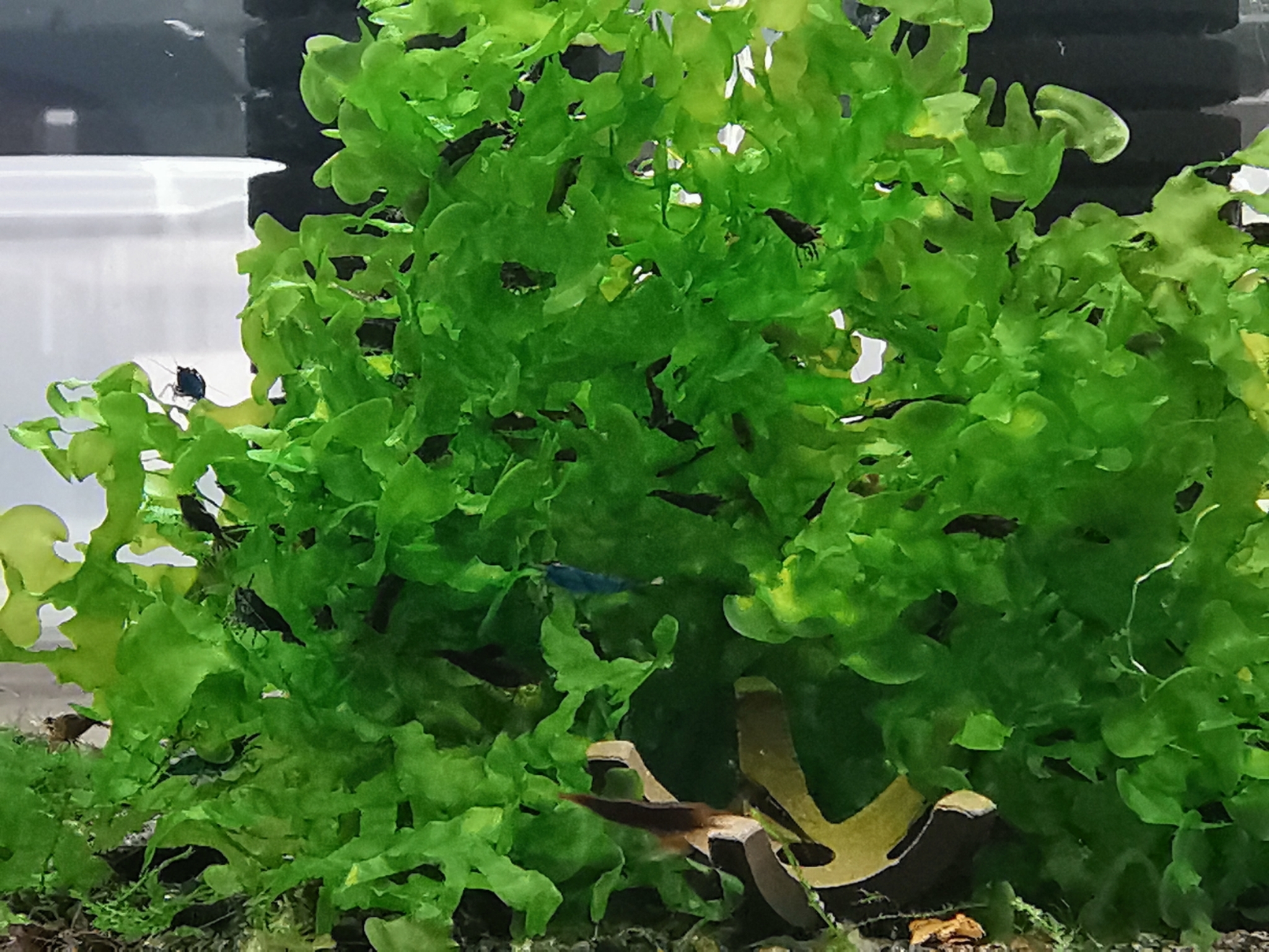
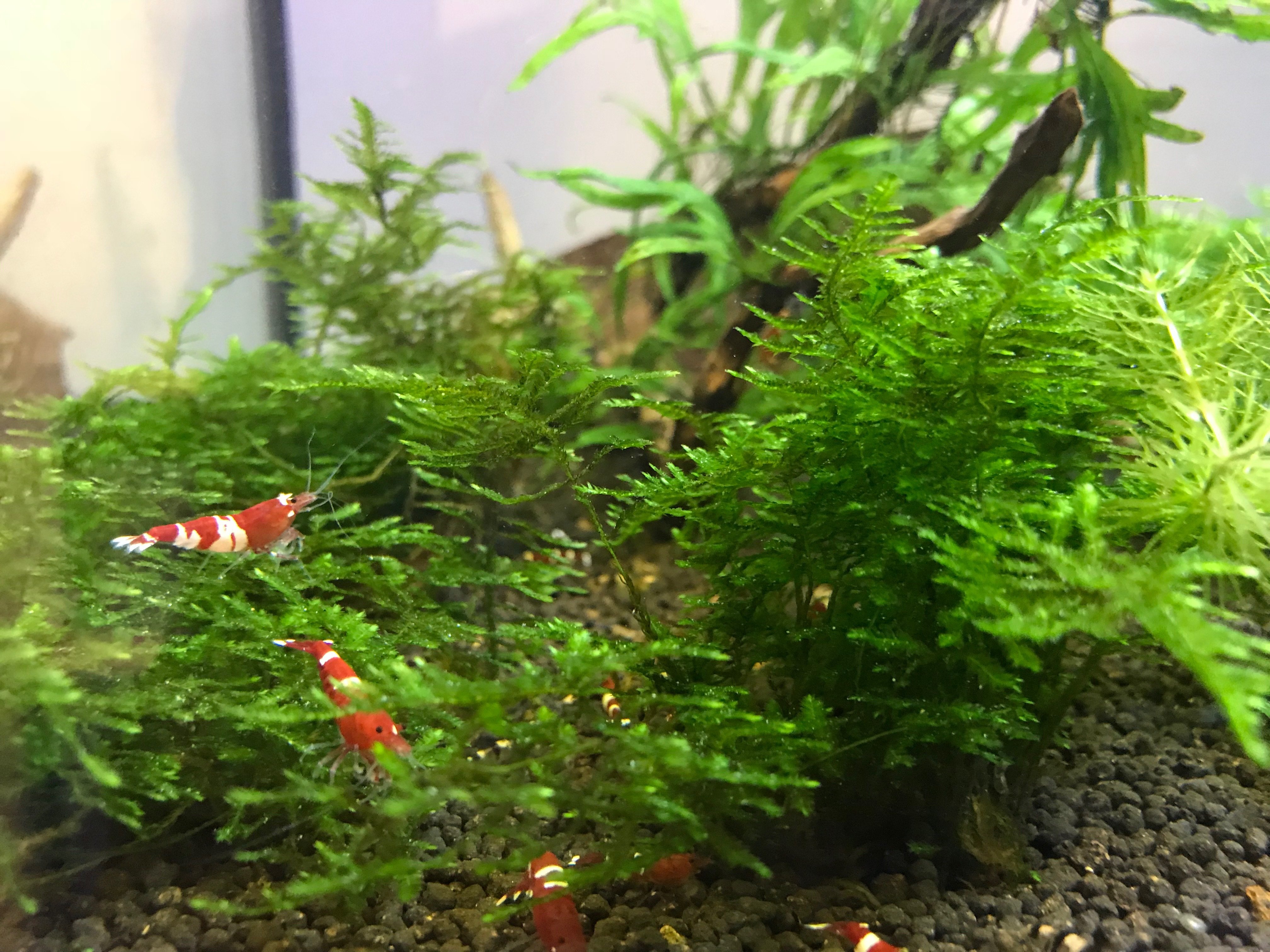
A rewarding choice for nano aquariums and shrimp tanks — shrimp graze the biofilm on its surface and tiny juveniles hide inside it. It needs no fertiliser, no CO₂ and hardly any maintenance.